
Reviewed · HISTORICAL TOURS
Palazzo Falson Historic House Museum entrance ticket
Mdina has a quiet treasure. Palazzo Falson Historic House Museum lets you walk through a centuries-old palace in Mdina and take in its collections with an included audio guide. I especially like the scale: you’re looking at 3,500+ objects tied to 45 collections.
For me, the best payoff comes at the end, when you step out to the upper-floor terrace and can slow down with a coffee while you watch Mdina and the surrounding countryside. One consideration: the museum isn’t suitable for children under 6, so plan around that if you’re traveling with little ones.
In This Review
- Key things you’ll notice inside Palazzo Falson
- Palazzo Falson in Mdina: why this house museum feels different
- What your Palazzo Falson ticket actually gives you
- From the courtyard to the piano nobile: how the building guides your visit
- The 3,500 objects and 45 collections: see it like a collector, not a checklist
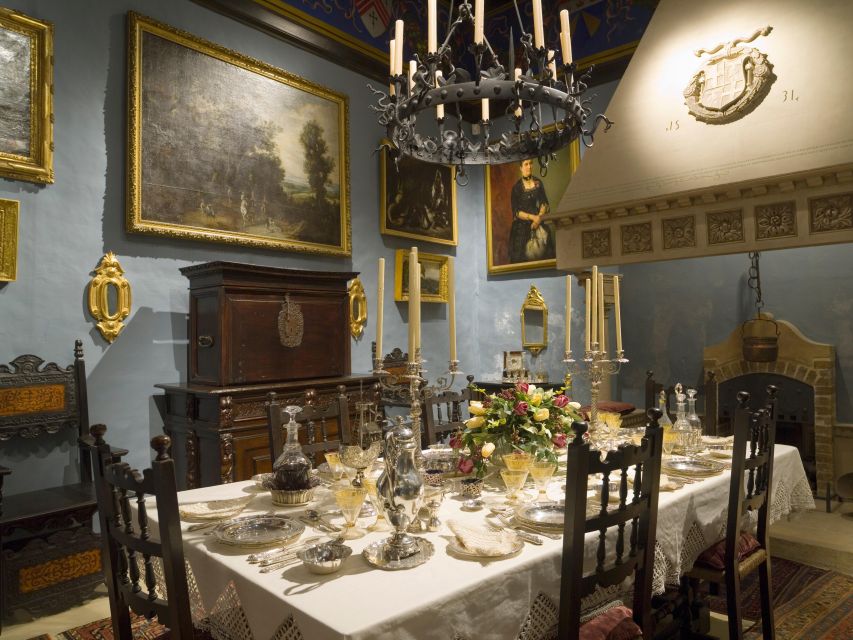
- Painting highlights: a 17th-century track through the house
- The library and manuscripts: when books become part of the décor
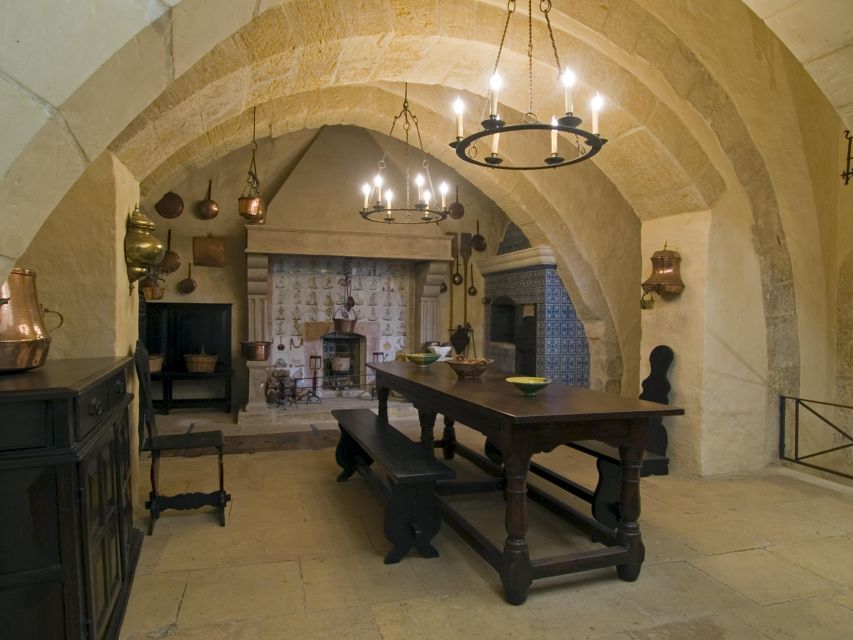
- Armoury, silver, jewellery, and Oriental rugs: the practical pleasure of “things”
- Mdina’s big events echo here: Knights and noble owners
- Finishing strong at the upper terrace café
- Price and value: is $15 a fair deal?
- Who should book Palazzo Falson, and who might skip it
- Should you book Palazzo Falson Historic House Museum?
- FAQ
- How much is the Palazzo Falson Historic House Museum entrance ticket?
- Where is Palazzo Falson located?
- How long is the visit for this ticket?
- What’s included with the entrance ticket?
- Which languages are available for the audio guide?
- What languages are the printed information available in?
- Is Palazzo Falson suitable for young children?
- How many collections and rooms are included in the house museum?
- Is there a place to relax with views during the visit?
- Do I have to pick a specific entry time?
Key things you’ll notice inside Palazzo Falson
- Mdina’s oldest-surviving style of home: one of the oldest standing buildings in the walled city
- 17 rooms wrapped around an internal courtyard: the layout helps you move at your own pace
- 45 specific collections: silver, furniture, jewellery, Oriental rugs, armoury, and more
- A notable painting line-up: 17th-century works attributed to major artists such as Mattia Preti and Jusepe de Ribera
- Library time: a remarkable collection of 4,500 books plus valuable manuscripts
- Upper terrace café views: a simple end point that makes the visit feel complete
A few more Malta and Gozo tours we happily vouch for
- Mdina: St. Paul’s Cathedral and Mdina Museum Entrance Ticket
★ 4.5 · 89 reviews - Mdina: The Knights of Malta Museum Entry Ticket
★ 4.3 · 63 reviews - Mdina: The Mdina Experience Audio-Visual Show (Open Ticket)
★ 4.3 · 22 reviews - 30-Minute Mdina Experience Audio-Visual Show Ticket (Open Ticket)
★ 4.5 · 4 reviews
Palazzo Falson in Mdina: why this house museum feels different
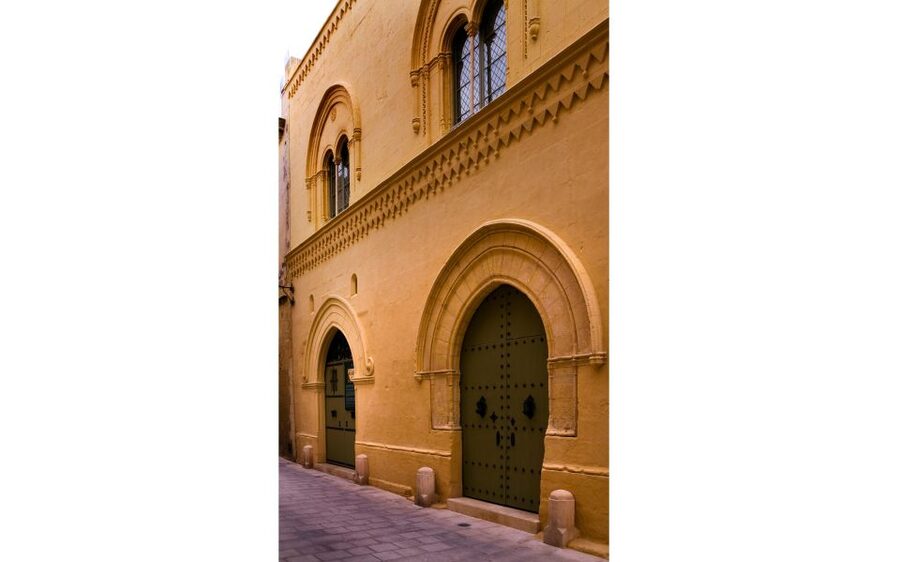
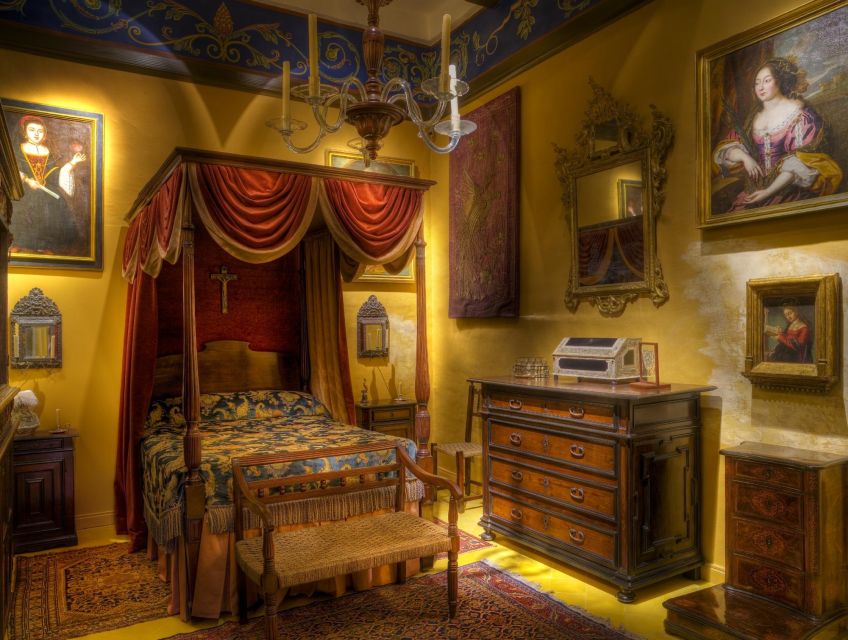
Palazzo Falson isn’t a big gallery in a big building. It’s a medieval palace shaped for real family life, designed around a courtyard and organized across two floors. That matters because you don’t just “look at art.” You experience how objects were collected and displayed in a home—some rooms feel like living spaces that happen to hold history.
This building is also tied tightly to Mdina’s identity. It’s described as the second oldest building still standing in the walled city, and it dates back to the early 13th century. Even if you’re not a museum person, the setting gives you an easy reason to care: you’re standing inside one of Mdina’s long-running architectural stories, not in a generic exhibition hall.
If you like your culture stops to feel personal and specific—rather than one more room of the same thing—this house museum fits. You can focus on a few collections deeply, or sweep broadly. Either way, you won’t feel rushed.
What your Palazzo Falson ticket actually gives you
Your entrance ticket includes an English audio guide (with options also offered in French, German, Italian, Maltese, and Spanish), plus printed info in many languages. That’s a practical setup if you want your visit to move faster than reading a lot of labels but still want context.
The museum is open for a day, and your ticket is valid for that 1-day window. You’ll still want to check availability for starting times, since entry depends on those slots.
Price-wise, it’s $15 per person. In a lot of places, that kind of ticket buys you a single “section.” Here, you get a full house experience: multiple collections (45 of them) spread through 17 rooms, plus a library collection with thousands of books and manuscripts. For Mdina, where distances are short but the experience can be dense, this is the sort of ticket that gives you value through variety.
From the courtyard to the piano nobile: how the building guides your visit
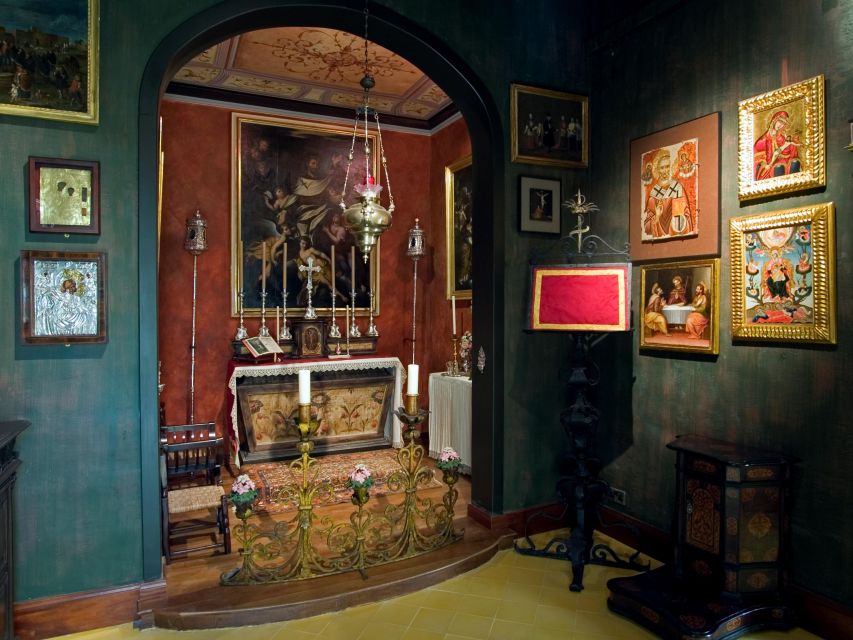
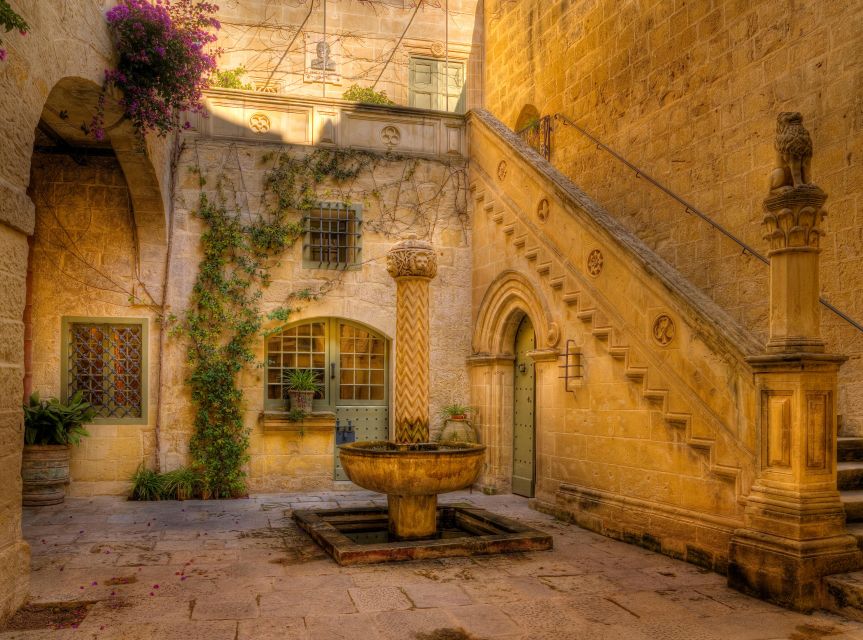
Palazzo Falson is a two-storey medieval palace fashioned on Sicilian examples of its period. It was purposely built as a family residence by Maltese nobility. What you feel as you walk around is the way the rooms are wrapped around an internal courtyard, creating a rhythm: narrow transitions, open views toward the center, then rooms that widen your perspective again.
The oldest part sits toward the back of the courtyard, and the noble floor—called the piano nobile—contains the original living quarters. That division is more than architectural trivia. It explains why the collection display feels layered: you’re moving through spaces that were meant for different parts of household life.
So here’s how I suggest you handle it when you arrive: give yourself permission to not “see everything” at once. Pick a few collections that match your interests (silver, rugs, armoury, paintings) and let the building’s flow help you connect the dots. If you try to race through all 17 rooms, you’ll end up skimming, and the house design won’t do its job.
More Maltese history tours tracing the Knights
The 3,500 objects and 45 collections: see it like a collector, not a checklist
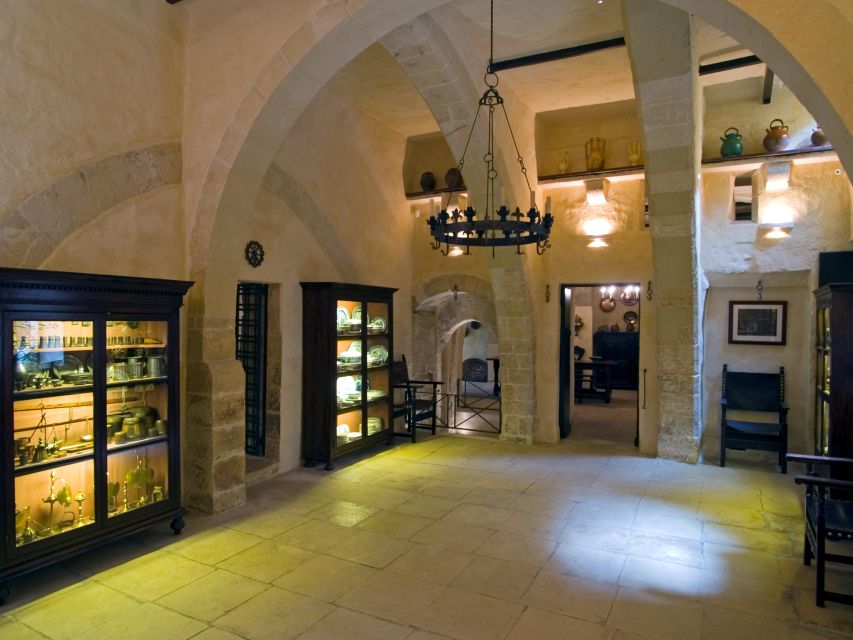
The heart of Palazzo Falson is its collection: over 3,500 objects in 45 specific collections spread across 17 rooms. That’s a lot, and the way you approach it changes the experience.
Think of it as a curated browsing route that you control. You’re not stuck reading every item, because the audio guide and printed information help you select what matters. If you’re the type who loves details, slow down for the objects that come in sets—silver and jewellery often work that way, as do textile-related displays.
Here’s what’s specifically included:
- Silver
- Furniture
- Jewellery
- Oriental rugs
- Armoury
- Paintings, including 17th-century works attributed to major artists
- A library with over 4,500 books and valuable manuscripts
If you want to get the most out of the 45 collections without burnout, you can use a simple strategy: aim for one “main category” per stop. For example, you could spend one room focused on decorative arts (silver and furniture), another focused on material culture (rugs, jewellery), and then swap to paintings for a different mood. The rooms and courtyard circulation make that kind of pacing feel natural.
Painting highlights: a 17th-century track through the house
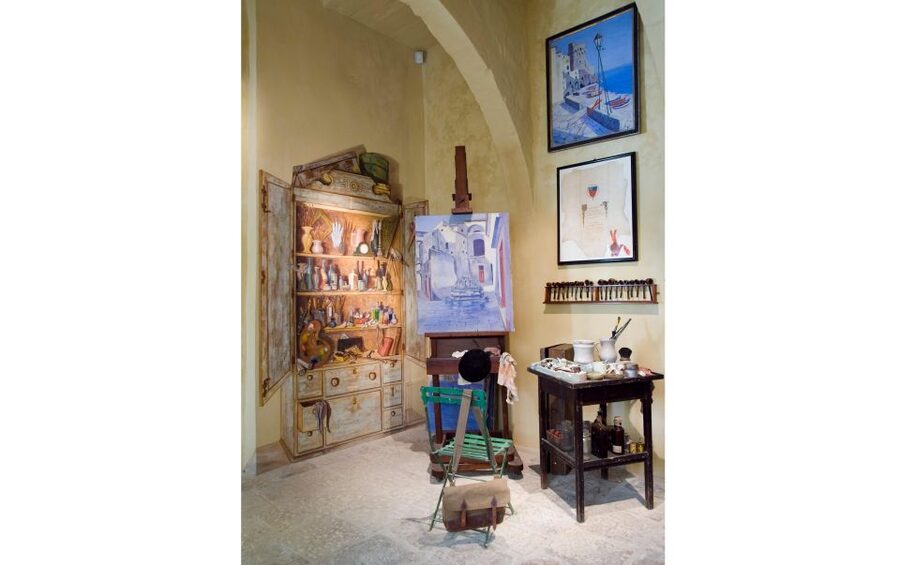
Palazzo Falson’s paintings collection includes significant 17th-century works, with works attributed to artists such as:
- Mattia Preti
- Jusepe de Ribera
- Jakob-Ferdinand Voet
- Charles Beale
- Juriaen van Streeck
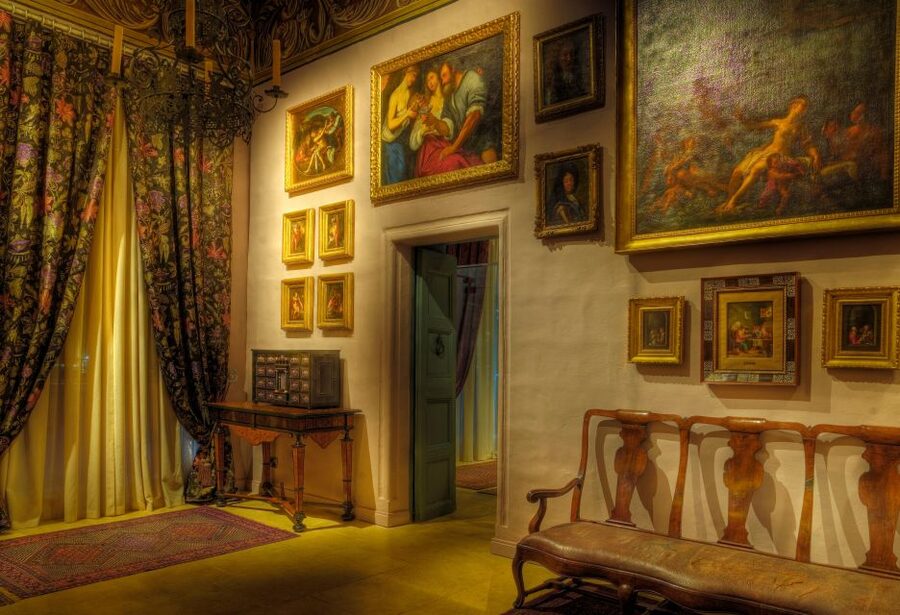
Even if your art knowledge is casual, this is the kind of set that helps you practice looking. Instead of treating it like a random gallery stop, you can treat it like a time capsule inside a home. Look at how these works are framed by their surroundings—palace rooms make paintings feel less like “art on a wall” and more like part of how people once lived with culture.
I also like that the paintings collection is only one part of the larger collection. So if you’re not in “art museum mode,” you’re not trapped. You can switch from paintings to objects—armoury, textiles, books—without the visit feeling off-track.
The library and manuscripts: when books become part of the décor
One of the most distinctive elements is the library. You’ll find over 4,500 books and highly valuable manuscripts. That’s not just a side room. In a house museum, it changes how you understand the place.
Captain Olof Frederick Gollcher O.B.E., the museum’s most recent owner and resident, was a collector with a wide lens: researcher, artist, philanthropist, and collector of objets d’art and historical items. A library of that size fits his story, and you can feel that collectors weren’t only hunting for pretty objects. They were collecting knowledge, written culture, and the physical proof of it.
If you enjoy libraries, or even if you just like the idea of old books surviving, this part is worth paying attention to. Even when you can’t read manuscripts on the spot, the sheer scale of books signals what kind of mind put this collection together.
Armoury, silver, jewellery, and Oriental rugs: the practical pleasure of “things”
Not everyone goes to house museums for paintings. Palazzo Falson gives you other entry points—things you can picture in daily life, and things that show wealth, craft, and taste.
- Silver and furniture help you notice workmanship and style.
- Jewellery brings that personal, wearable aspect into the room.
- Oriental rugs add texture and pattern, and they help you see how collected culture traveled into Malta.
- Armoury shifts the mood toward power and protection—an entirely different kind of craftsmanship.
Because these collections are spread across multiple rooms, you get contrasts. One room might feel more decorative, another more monumental. That variety is a big part of why the house layout works.
I also like that the museum isn’t pretending everything is the same. The categories sit in different kinds of spaces, which makes the objects feel placed with intention.
Mdina’s big events echo here: Knights and noble owners
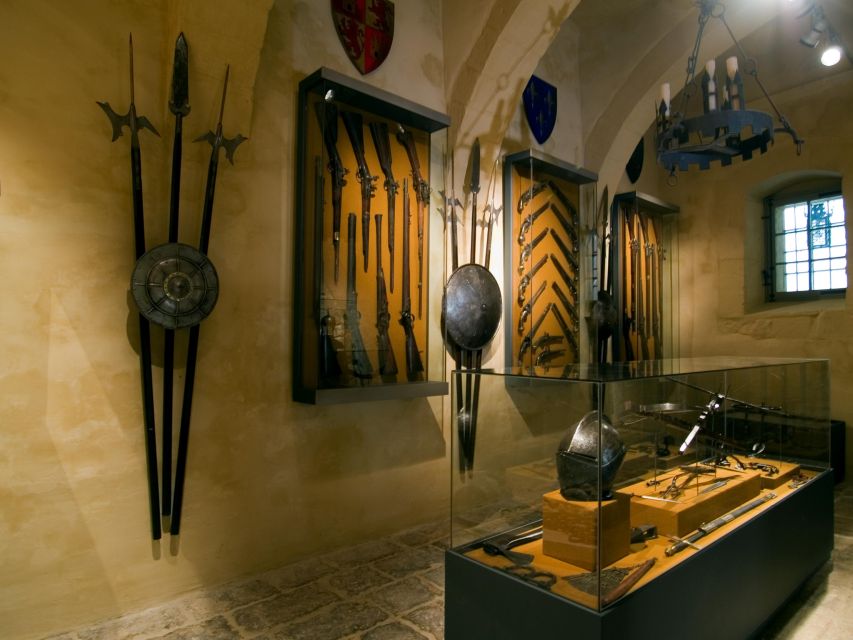
Part of why this museum stays interesting is the building’s own timeline. Palazzo Falson is known by different names over time: Palazzo Cumbo-Navarra, Casa dei Castelletti, and The Norman House. It also connects to major moments in Mdina and Malta.
In the early 16th century, the property was inherited by Vice Admiral Michele Falson, who served as Head of the Town Council. Then, after Malta was donated to the Knights of the Order of St. John, Grand Master Philippe Villiers de L’Isle Adam was hosted by Maltese nobles at Palazzo Falson after taking possession of Mdina on 13 November 1530.
Why does this matter to your visit? It turns the museum from “a cool building” into “a home that hosted big chapters of local power.” When you know that this is where a Grand Master was hosted, the rooms feel more charged, even if you’re only casually reading the audio guide.
The palace also reopened to the public in May 2007 after a major restoration by Fondazzjoni Patrimonju Malti (Maltese Heritage Foundation). That restoration context helps explain why the place feels cared for rather than worn down.
Finishing strong at the upper terrace café
The visit has a natural closing point: there’s a cafeteria on the terrace on the upper floor, and it comes with magnificent views of Mdina and beyond.
This is more than a nice extra. A house museum with lots of rooms can blur in your mind if you keep your energy up for hours. Stepping onto the terrace gives you a reset. You can point your attention outward, take a breath, and return to your memories of what you saw inside.
If you want a simple “wrap-up ritual,” plan your timing so you’re not rushing the terrace. In my experience, the best museum endings are the ones that let you sit, snack, and connect the building’s past to the town’s present.
Price and value: is $15 a fair deal?
At $15 per person, Palazzo Falson is priced like a serious cultural stop rather than a quick add-on. Here’s why the value works:
- You’re paying for an entrance ticket to a full house museum spread through 17 rooms.
- You get context through an audio guide and printed information in many languages.
- You get access to a collection set that includes major categories: silver, jewellery, rugs, armoury, paintings, and a large library with 4,500+ books.
- The building itself is part of the experience, since it’s one of the oldest standing structures in Mdina.
If your travel style is “I want one place that gives me variety,” this ticket makes sense. If you’re only interested in a single category—say, jewellery only—or if you expect everything to be kid-friendly, you may feel the museum is too broad for your taste.
Also remember: the museum isn’t for young children under 6. If you’re traveling with that age group, you’ll want another plan.
Who should book Palazzo Falson, and who might skip it
You’ll likely enjoy Palazzo Falson if you:
- like historic houses and house museums
- enjoy decorative arts (silver, furniture, jewellery) and material culture (rugs, armoury)
- want a strong reading-and-library element as part of the visit
- appreciate art that’s set in context, not just hung on a blank wall
You might think twice if you:
- want a very short stop, because 17 rooms and 45 collections take some attention
- are traveling with children under 6
- prefer only contemporary exhibits or only one narrow art genre
Should you book Palazzo Falson Historic House Museum?
If you’re doing Mdina for real—walking the streets, taking in the fortress feel, and wanting one interior stop with depth—I’d book Palazzo Falson. For $15, you get a rare combination: a medieval palace layout, 45 collections across 17 rooms, a library with 4,500+ books, painting attributions to major 17th-century names, and that upper-terrace payoff with views.
My advice: plan for a paced visit, pick a couple categories to focus on, and leave time to end on the terrace. That’s how you turn it from a ticket into a memory.
FAQ
How much is the Palazzo Falson Historic House Museum entrance ticket?
The entrance ticket is listed at $15 per person.
Where is Palazzo Falson located?
It’s in Malta, in the city of Mdina.
How long is the visit for this ticket?
The ticket is valid for 1 day.
What’s included with the entrance ticket?
Your ticket includes the entrance to Palazzo Falson Historic House Museum, an audio guide, and printed information.
Which languages are available for the audio guide?
The audio guide is available in English, French, German, Italian, Maltese, and Spanish.
What languages are the printed information available in?
Printed information is available in Arabic, Chinese, Czech, Dutch, English, French, German, Greek, Hungarian, Italian, Japanese, Maltese, Polish, Portuguese, Russian, Slovak, Spanish, Swedish.
Is Palazzo Falson suitable for young children?
It is not suitable for children under 6 years.
How many collections and rooms are included in the house museum?
The collections are spread across 17 rooms, with 45 specific collections.
Is there a place to relax with views during the visit?
Yes. There is a cafeteria on the terrace on the upper floor with views of Mdina and beyond.
Do I have to pick a specific entry time?
Your ticket is valid for 1 day, and you should check availability to see starting times.
More Maltese History Tours

More Tickets in Mdina




More Tour Reviews in Mdina



Wondering what else is on? More Malta and Gozo trips from our own notebook




Historical Tours, compared.
 ★ 4.0Maltese Islands History Audio-Visual Show and La Sacra Infermeria TourFrom $24344 reviews
 ★ 3.7Valletta: Self-Guided Historical Walking Tour (Audio Guide)From $8251 reviews
 ★ 4.5Wonderful Valletta, gastronomy, art, and history in the MediterraneanFrom $5472 reviews
 ★ 5.0The Dark History of Valletta – Walking TourFrom $2450 reviews
 ★ 4.5The Food & History Private Tour of MaltaFrom $16744 reviews
 ★ 4.5Mdina: Private Historical City Walking Tour with Rabat TownFrom $17741 reviews
 ★ 5.0Mdina and Rabat Food and History TourFrom $8124 reviews
 ★ 3.0From Sliema or Bugibba: Gozo Heritage Day PassFrom $7116 reviews
Browse the lists this tour appears in