
Reviewed · MDINA & RABAT TOURS
Mdina and Rabat Food and History Tour
Mdina and Rabat always feel like Malta’s greatest hits in one afternoon. This 3.5-hour walking tour pairs the old capital’s movie-ready streets with solid local eating, and it does it in a small group size (max 12). I like that the focus stays practical: you get the key St Paul landmarks fast, then you eat your way through Rabat’s favorite bites. The main thing to consider is that the cathedral and grotto stops are picture time (around 10 minutes each), and the admissions there are not included.
What makes the experience click is the way the food and history connect without slowing down. A guide can point out architectural details, explain why St Paul’s story matters here, and then hand you Malta staples like pastizzi and rabbit stew. In guides’ hands, this is the kind of tour where you leave full and oriented—especially if it’s your first time in Mdina and Rabat. One drawback: you’ll want to bring comfortable shoes, because the pace is steady and you’re on your feet for most of the tour.
In This Review
- Key Things You’ll Notice on This Mdina and Rabat Tour
- Mdina’s Main Gate: your first look at the old capital
- Metropolitan Cathedral of Saint Paul: a quick stop with big meaning
- St. Paul’s Grotto: what you see on the surface matters
- Rabat food stops: snacks that turn history into a memory
- Pastizzi and kinnie (your first serious Maltese hit)
- Ħobż biż-żejt and sides: bread as a full experience
- Bragioli and rabbit: the dishes you’ll remember later
- Maltese coffee, fruit, and imqaret: a sweet finish
- The guide factor: why names like Chris, Bridgette, and Darrell matter
- Timing and walk pace: how the 3 hours 30 minutes actually feels
- Price and value: $81.93 includes more than you’d expect
- Who this tour is best for (and who should pick something else)
- Tips to get the most from Mdina and Rabat
- Should you book this Mdina and Rabat Food and History Tour?
- FAQ
- How long is the Mdina and Rabat Food and History Tour?
- What time does the tour start, and where do we meet?
- What’s included in the price?
- Are admission tickets included for the cathedral and St. Paul’s Grotto?
- What group size is this tour limited to?
- What language is the tour offered in?
- What if the weather is bad?
Key Things You’ll Notice on This Mdina and Rabat Tour
- Small group energy with a maximum of 12 people (and some departures feel even more intimate)
- Food stops that are actually Maltese, including pastizzi, kinnie, ħobż biż-żejt, bragioli, and rabbit
- St Paul landmarks at both the Metropolitan Cathedral of Saint Paul and St. Paul’s Grotto
- Local drinks included, with local craft beer, a glass of wine, and kinnie
- Mdina’s Main Gate entrance to the old capital, the start of the walled-city walk
More Mdina and Rabat tours we have wandered the silent city on
- Mdina and Rabat Insider’s Tour
★ 5.0 · 528 reviews - Valletta: Vintage Bus to Valletta, Sliema, Rabat & Mdina
★ 4.1 · 433 reviews - Half-Day Tour of Mosta, Ta’Qali Crafts Village & Mdina
★ 4.1 · 110 reviews - Mysteries of Mdina:Semi private Tour of the Ancient city
★ 4.5 · 32 reviews
Mdina’s Main Gate: your first look at the old capital
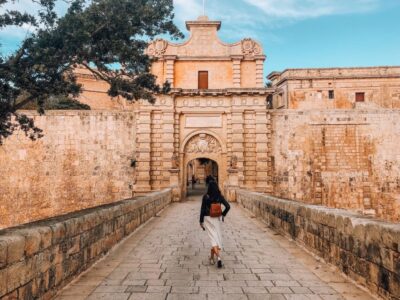
You start at Is-Serkin – Crystal Palace Bar in Ir-Rabat, right by Triq San Pawl. From there, you get moving toward Mdina’s Main Gate, a baroque gateway that sets the tone immediately—this is the kind of entrance that makes you feel like you’ve stepped onto a film set. The gate is your launch point into Mdina, Malta’s old capital city, where the streets are built for wandering slowly.
This opening stop also works well as a warm-up. You’re not trying to sprint into history while hungry and jet-lagged. Instead, you get a quick orientation moment, and you learn what to look for as you proceed. The gate itself has free admission, so you’re not dealing with fees right at the start, and you can focus on photos and first impressions.
Practical note: this tour is designed for a smooth flow. That’s great for time, but it also means the early moments are about getting bearings and momentum—not lingering.
Metropolitan Cathedral of Saint Paul: a quick stop with big meaning
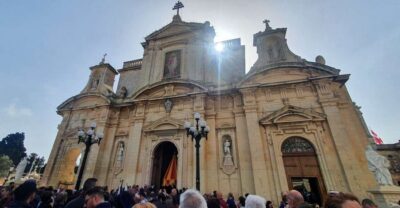
Next comes the Metropolitan Cathedral of Saint Paul, Malta’s main church dedicated to St Paul. You’ll stop for pictures in front of the mother church of the Maltese Islands, with about 10 minutes of time. That short window is intentional: it keeps the tour moving so you can hit the food later without feeling like you missed the religious landmarks.
Even if you don’t plan to go inside, the cathedral matters because St Paul’s story sits at the center of Rabat and Mdina’s identity. You’ll get enough context from the guide to make the building feel more than just a photo backdrop.
One consideration: admission is not included for the cathedral stop. Since your time there is picture-focused, check whether you want to spend extra time inside (and be ready to pay separately if you do).
St. Paul’s Grotto: what you see on the surface matters
From the cathedral area, the tour shifts to St. Paul’s Grotto, where you’ll stop in front of the church that lies over the grotto. This is tied to the tradition that St Paul lived in Malta for about three months, which is why this site carries so much spiritual and historical weight.
Again, you’re looking at the location and the story behind it, not racing through a full museum-style experience. You get about 10 minutes, mostly for understanding and snapping photos.
The big practical point is the same: admission is not included here either. If you’re the type who wants to go deeper (literally, in this case), you’ll want to factor in extra cost and time beyond the guided stop.
If you like tours where you get context first and then decide what’s worth your extra effort, this stop format is a good match.
More Maltese food, wine and pastizzi trails we have eaten our way along


Rabat food stops: snacks that turn history into a memory
This is a food tour, so the heart of the experience is what you taste in Rabat. The tour includes multiple snack stops, with enough variety to get a real feel for Maltese flavors—not just one or two bites.
You’ll also get drinks included throughout the tour:
- Local craft beer plus a glass of wine
- Kinnie, the local soft drink
Pastizzi and kinnie (your first serious Maltese hit)
Pastizzi are one of the first foods people look for in Malta, and this tour is built around that idea. You’ll stop for pastizzi paired with kinnie, which is tangy and slightly unique—great for cutting through richness.
This is a smart start food-wise. It’s filling enough to keep you energized, but not so heavy that you can’t enjoy the rest of the meal-style tasting.
Ħobż biż-żejt and sides: bread as a full experience
Next up is ħobż biż-żejt, Malta’s bread with olive oil, typically served with sides. This is the kind of food that makes sense only once you taste it: simple ingredients, big comfort factor, and it helps you reset between denser dishes.
If you’re used to tourism food that feels repetitive, this stop helps break the pattern. It’s not just another pastry—this is everyday Maltese eating style.
Bragioli and rabbit: the dishes you’ll remember later
Later, the tour shifts to deeper, meal-like bites:
- Bragioli
- Rabbit (including rabbit stew)
- Plus sides like roast potatoes and vegetables
One of the best parts of this format is pacing. You get a mix of textures: flaky pastry, oiled bread, then hearty braised meats. By the time you reach the rabbit and bragioli portion, the food feels like a true progression instead of random sampling.
Maltese coffee, fruit, and imqaret: a sweet finish
You’ll also get Maltese coffee with fresh fruit, then a sweet stop with imqaret (a Maltese pastry usually associated with honey or syrupy fillings).
This is a nice touch because it keeps the tour from feeling like a nonstop sugar-and-salt sprint. You end with something local that feels tied to the same everyday culture as the savory dishes.
The guide factor: why names like Chris, Bridgette, and Darrell matter
A food-and-history tour can go two ways: either the guide connects the dots, or you just collect snacks and landmarks. The best guides on this tour clearly focus on connection.
In the experiences I’m describing, guides such as Chris have shared how personally tied they are to the area—one guide mentioned family living there since the 1400s. That kind of local grounding makes the history feel less like memorized facts and more like lived-in story.
Another reason this tour tends to work: you’ll often get details you can use while you explore on your own after. For example, guides pay attention to what you’re photographing and point you toward similar viewpoints. It’s small stuff, but it helps you capture the place more accurately and with less wandering.
Also worth noting: one guide checked in about allergies before the tour. When you book, list any allergies clearly. It’s the easiest way to ensure you get food you can actually enjoy.
Timing and walk pace: how the 3 hours 30 minutes actually feels
The tour runs about 3 hours 30 minutes, starting at 10:30 am and ending back at the meeting point. Each of the major landmark stops is roughly 10 minutes, which means you’re moving steadily between sites and tasting bites along the way.
For me, the value of this structure is simple: it’s long enough to feel satisfying, but short enough that you still have energy to explore Mdina and Rabat afterward. If you’re planning a second day of Malta sightseeing, this time block doesn’t steal your whole schedule.
Group size is kept small (max 12), which makes the experience more flexible. It’s also easier for the guide to keep everyone together during tight streets and photo stops.
Comfort tip: even if each stop is short, the walking adds up. Wear shoes you trust.
Price and value: $81.93 includes more than you’d expect
At $81.93 per person, this tour isn’t a bargain snack crawl, but it also doesn’t feel overpriced for what’s included. You get:
- A fully licensed professional tourist guide
- Local craft beer and a glass of wine
- Kinnie
- Multiple Maltese snack stops (including pastizzi, ħobż biż-żejt with sides, bragioli, rabbit, and more)
- A mobile ticket
- Plus the fact that the itinerary hits both Mdina and Rabat without requiring you to plan each leg yourself
Where the value really shows is in the drinks and food included. In many self-planned days, you’d pay separately for a guide, then add food, then add tastings. Here, it’s bundled into a timed route.
The only potential cost surprise is that admission isn’t included for the cathedral and St Paul’s Grotto. The Mdina gate portion is free, but you should be prepared to pay if you decide you want more than the front-of-building photo stop.
Who this tour is best for (and who should pick something else)
This fits best if you want:
- Your first taste of Maltese food alongside a basic history framework
- A small-group walk with enough structure to prevent aimless wandering
- St Paul sites covered in one go, without turning your day into a checklist
You might want a different option if:
- You expect lots of time inside churches or grotto areas (the itinerary is primarily photo stops)
- You’re very sensitive to the cost of optional admissions later on
- You prefer long, slow museum-style experiences over a guided walking route
If you like food tours that feel local and not staged, this one has the right shape.
Tips to get the most from Mdina and Rabat
A few practical moves can make the day smoother:
- Come ready to walk. Even with short stops, you’ll be on your feet most of the time.
- Bring a small bottle of water if you know you get thirsty easily, especially in warm conditions.
- Let the guide know about allergies at booking (and verify any restrictions when you receive your confirmation).
- Take photos early at each landmark stop. With about 10 minutes at the big sites, you’ll thank yourself later.
- If you’re visiting around a major local event, you might catch extra street atmosphere. In one example, being in Rabat on the eve of the festa meant seeing flags and lights going up and locals coming together.
Should you book this Mdina and Rabat Food and History Tour?
I’d book it if you want a first-time Malta day that blends Mdina’s walled-city vibe with a real lineup of Maltese comfort foods and a guide who ties the landmarks to why they matter. The inclusion of local drinks, plus multiple traditional dishes like pastizzi, rabbit stew, and ħobż biż-żejt, makes it feel like you’re actually getting Malta in the time you have.
Skip it or compare alternatives if you’re hoping for lots of time inside the cathedral and grotto. The guided stops are front-facing and time-boxed, and admissions aren’t included for those sites.
If your schedule is flexible, you’ll appreciate that the tour is weather-dependent and may be rescheduled or refunded if conditions are poor. Plan for comfortable walking, show up hungry, and you’ll likely leave with both stronger context and a full plate’s worth of local flavor.
FAQ
How long is the Mdina and Rabat Food and History Tour?
It runs for approximately 3 hours 30 minutes.
What time does the tour start, and where do we meet?
The start time is 10:30 am, and the meeting point is Is-Serkin – Crystal Palace Bar, Triq San Pawl, Ir-Rabat, Malta. The tour ends back at the meeting point.
What’s included in the price?
The price includes a fully licensed professional tourist guide, local craft beer and a glass of wine, kinnie, and snack tastings such as pastizzi, ħobż biż-żejt with sides, bragioli, rabbit, and additional items like Maltese coffee and fruit.
Are admission tickets included for the cathedral and St. Paul’s Grotto?
No. You’ll stop for pictures at Metropolitan Cathedral of Saint Paul and in front of St. Paul’s Grotto, but admissions for these stops are not included. The Mdina main gate portion is free.
What group size is this tour limited to?
This activity has a maximum of 12 travelers.
What language is the tour offered in?
The tour is offered in English.
What if the weather is bad?
The tour requires good weather. If it’s canceled due to poor weather, you’ll be offered a different date or a full refund. You can also cancel for a full refund up to 24 hours before the experience starts.
If you want, tell me your travel dates and food preferences (or any allergies), and I’ll help you decide whether this is the best match for your Malta day.
More Tour Reviews in Malta

More Maltese Food, Wine & Chocolate


More Mdina & Rabat Tours

Wondering what else is on? More Malta and Gozo trips from our own notebook


Mdina & Rabat Tours, compared.
 ★ 4.4Highlights of Malta & Mdina Full Day Tour with LunchFrom $792,688 reviews
 ★ 4.8Mdina and Rabat Walking Tour with CatacombsFrom $291,126 reviews
 ★ 4.3Mdina, Dingli Cliffs and San Anton Botanical GardensFrom $41991 reviews
 ★ 4.8Mdina and Rabat: Guided City Walking TourFrom $24549 reviews
 ★ 5.0Mdina and Rabat Insider’s TourFrom $24528 reviews
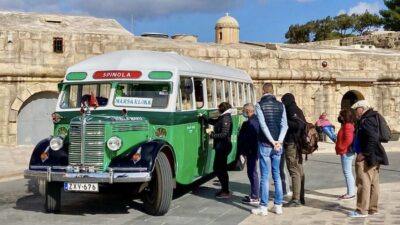 ★ 4.1Valletta: Vintage Bus to Valletta, Sliema, Rabat & MdinaFrom $9433 reviews
 ★ 5.0Mdina and Rabat Tour with Local GuideFrom $24408 reviews
 ★ 5.0Mdina and Rabat Walking Tour inc. Catacombs and St. Paul’s GrottoFrom $30341 reviews
Browse the lists this tour appears in