

Reviewed · MDINA & RABAT TOURS
Malta: Mdina and Rabat Tour with Local Guide
Quiet streets, big stories, killer views. This Mdina and Rabat tour is a focused walk with a local guide, built around the old-capital vibe, noble palaces, and the sweeping look across Malta. I especially like the slow, winding pace through Mdina’s lanes and the chance to stand on the bastions for panoramic island views, while learning how Rabat fits into the same St. Paul story. One thing to consider: this is still a walking tour, so bring solid shoes and expect cobblestones and some wall steps.
You’ll meet just outside the main gate of Mdina, by a small playground area, and you’ll get a live English guide for about 2.5 hours. It’s a great fit if you want context, not just sightseeing stamps.
In This Review
- Key highlights that make this tour worth it
- Why Mdina and Rabat work so well for a 2.5-hour walk
- Meeting at Mdina Gate: start where the old city begins
- Mdina Cathedral: where the St. Paul story takes a physical form
- Belvedere viewpoint: Malta views that feel close enough to touch
- Walking Mdina’s palaces and lanes: the part that makes the town feel real
- Exiting through Greek’s Gate and heading into Rabat’s everyday historic rhythm
- St. Paul’s Basilica in Rabat: the ending that gives the story closure
- How Chris the local guide turns a walk into a story you remember
- Price and value: $24 for a guided walk with real payoff
- What to bring: shoes, water, and weather rules that matter
- Who should book this Mdina and Rabat tour
- Should you book this Mdina and Rabat tour?
- FAQ
- How long is the Mdina and Rabat tour?
- Where do I meet the guide?
- How much does it cost?
- Is the tour guide live, and what language is it in?
- What are the main stops during the walk?
- What should I bring with me?
- Is there free cancellation?
- Can I reserve without paying right away?
Key highlights that make this tour worth it
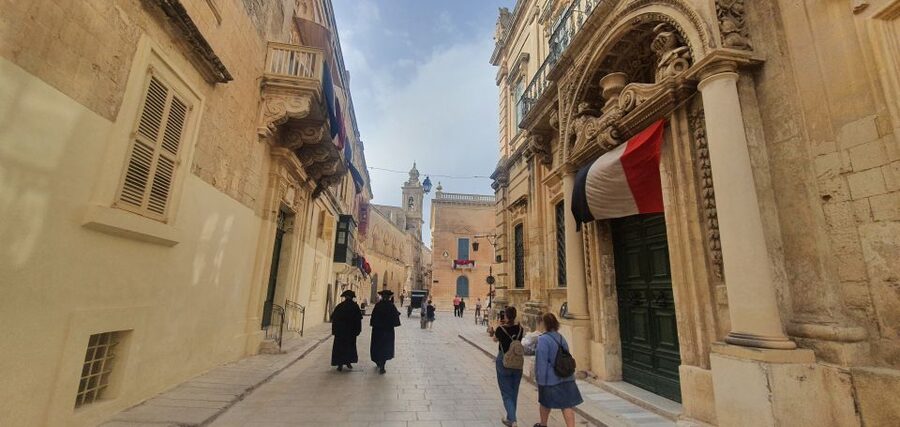
- Mdina’s quiet backstreets: You move through the old capital on foot, not in a rush.
- Wall-battlement viewpoints: The best Malta-over-Malta moments happen from the bastions.
- Two Saint Paul stops: Mdina’s cathedral and Rabat’s St. Paul’s Basilica connect the dots.
- A local Rabat perspective: Chris lives there, so the town feels like a place people actually inhabit.
- Humor + clear storytelling: The tour pacing stays lively, with room for questions and photos.
More Mdina and Rabat tours we have wandered the silent city on
- Mdina and Rabat: Guided City Walking Tour
★ 4.8 · 549 reviews - Malta: Mdina and Rabat Tour with Local Guide
★ 5.0 · 408 reviews - Mdina and Rabat Walking Tour inc. Catacombs and St. Paul’s Grotto
★ 5.0 · 341 reviews - Mdina and Highlights of Malta Full Day Guided Tour Incl. Lunch and Transfers
★ 4.0 · 299 reviews
Why Mdina and Rabat work so well for a 2.5-hour walk
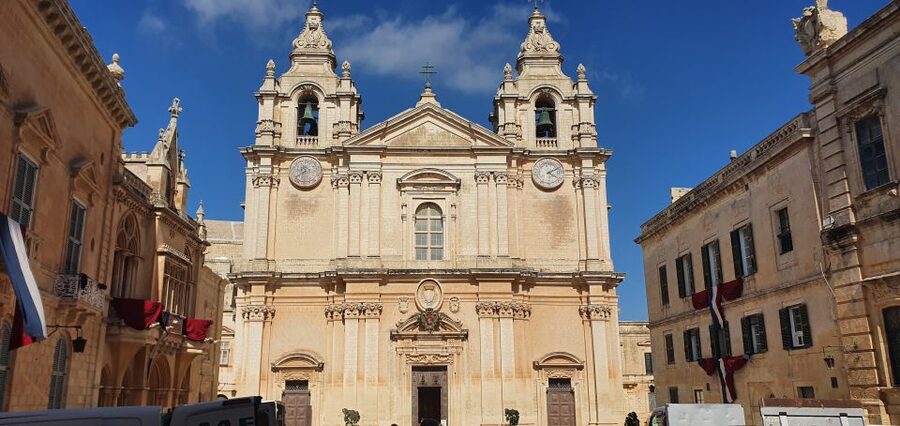
Mdina and Rabat sit next to each other like two chapters of the same book. Mdina is the image most people picture when they think Malta: a walled old capital, tight lanes, pale stone, and a calm that makes you lower your voice without meaning to. Rabat, just outside those walls, feels more lived-in—still historic, but with the everyday rhythm of residents.
In this tour, the time is used wisely. You get the visual payoff (views and classic architecture), and you also get the connective tissue: why Mdina looks the way it does, how Rabat grew alongside it, and what role St. Paul played during his Malta visit. The guide, Chris, is a big reason this tour clicks. From the feedback, he’s good at mixing history with current-day details, including local family stories and what’s nearby now.
The sweet spot here is people who want “first-time clarity.” If you’re the type who looks at a building and wants to know what was happening when it was built, this is your lane. If you only want museum interiors and long sit-down breaks, you might feel the tour is too walking-heavy for your style.
Meeting at Mdina Gate: start where the old city begins
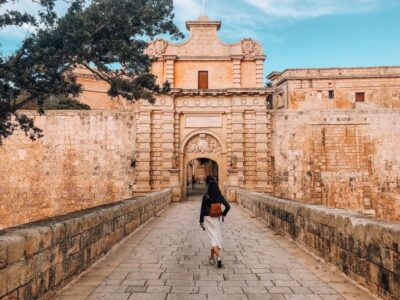
You start at Mdina Gate, meeting your guide just outside the main gate area on the side of the playground. That’s a smart setup, because it lets you orient immediately—before you disappear into the winding streets.
From the start, the vibe is about slowing down. Mdina’s main visual strengths aren’t dramatic in one single photo; they build as you walk: archways, corners that bend your line of sight, and palaces that look like they’re guarding secrets. The guide’s role matters here. He’s able to point out what you’re seeing right now and connect it to what it meant back then, so you’re not just looking at stone—you’re reading it.
Timing is also practical. The tour begins with a short intro at the gate, then you move into the sights without losing the group to a long waiting period. For a 2.5-hour experience, that kind of momentum helps.
Tip for you: arrive a few minutes early. Mdina’s streets can feel a little like a maze until you get your bearings.
Mdina Cathedral: where the St. Paul story takes a physical form

One of the tour’s best “story anchors” is Mdina Cathedral. This stop isn’t just a quick glance. It’s time to understand the context around the cathedral and how it fits into Malta’s famous St. Paul narrative.
St. Paul is one of those historical figures everyone knows, but it’s easy for the story to stay abstract. Mdina Cathedral helps make it concrete. You can connect the religious and historical layers to the setting: an old capital built to last, where the message of faith and history has a long memory in the stone.
If you’re traveling with mixed interests—say, one person who loves churches and another who just wants good architecture—this is a workable compromise. Even if you don’t go deep into religious detail, the building and its location within Mdina’s layout give you a clear sense of why this town matters.
Practical note: bring comfortable shoes. Cathedral floors and surrounding areas can mean uneven surfaces, and you’ll be standing and walking a lot in a short time.
More guided Malta tours with a Maltese local up front
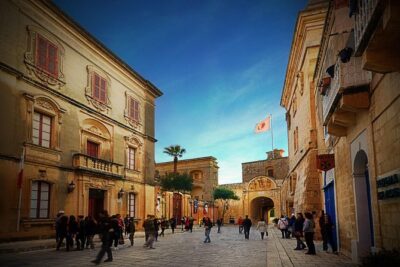
Belvedere viewpoint: Malta views that feel close enough to touch
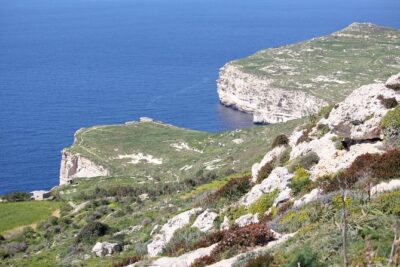
Next comes Belvedere, a viewpoint stop that’s timed perfectly in a walking tour. After you’ve been inside Mdina’s lane-world, the Belvedere moment flips the experience from tight and quiet to wide and airy.
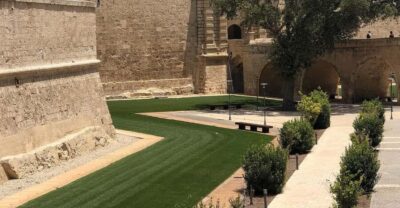
This is where the “why did people build cities here?” question starts to make sense. From the bastions, you see how the islands stretch out and how Malta’s geography shapes daily life—sea access, city placement, and the overall sense of being watched by the horizon.
What I like about this stop as a traveler is that it’s not just a generic photo break. It’s paired with history and explanation, so the view feels purposeful instead of random. You’re not only photographing Malta; you’re learning to interpret what you’re seeing.
If you’re visiting in hot weather, plan on this being the time you’ll want water most. A viewpoint can mean wind or sun, depending on the day, and you won’t want to ration hydration.
Walking Mdina’s palaces and lanes: the part that makes the town feel real
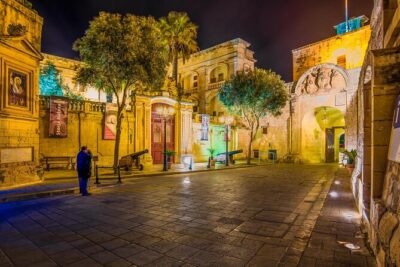
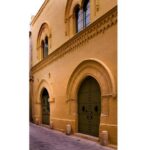
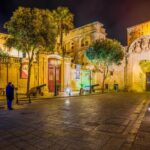
The heart of the tour is the long stretch through Mdina itself—about 75 minutes devoted to walking and seeing. This is where you slow down enough to notice the patterns: the quiet lanes, the way the city’s layout guides you, and the palace presence that gives Mdina its noble character.
The guide points out impressive palaces of the Maltese nobility along the way, and that matters because it changes how you read the architecture. Without context, a palace is just a large building. With context, it becomes a clue—about power, wealth, and the social structure that shaped the city.
The “best” part here isn’t one single monument. It’s the accumulation. Mdina doesn’t hit like a blockbuster; it works like a good conversation. Corners reveal new angles. A narrow street opens into a wider space. And your understanding grows as you walk.
One consideration: Mdina is compact, but you’re still on stone streets for a while. If you’re sensitive to walking time, pace yourself early. Stop for photos without rushing, and let the guide set the rhythm.
Exiting through Greek’s Gate and heading into Rabat’s everyday historic rhythm
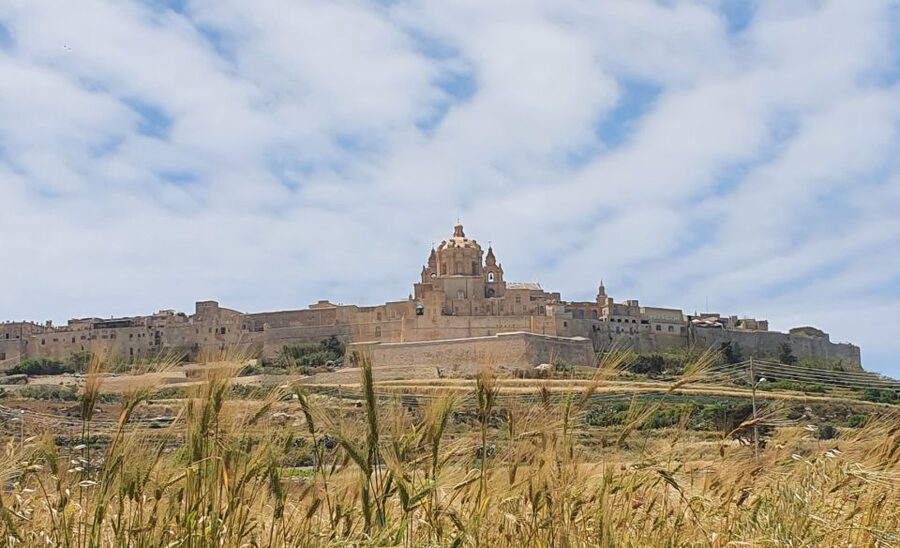
After Mdina, you exit through Greek’s Gate and head toward Rabat. This transition is more than route planning. It’s a mood shift.
Mdina feels like a protected time capsule. Rabat feels like the living neighbor that has to handle day-to-day life. The tour uses that shift to keep things interesting: you’re not just repeating an old-city loop. You’re moving from the walled capital mindset into the broader town that grew alongside it.
Rabat’s value is that it adds human scale to the history. Instead of only looking up at walls, you’re walking streets where people still live and move. If you like small social details—what residents value, how local identity shows up in daily life—this is where the tour earns its “local guide” label.
This is also where the guide’s personality becomes obvious. Feedback highlights that Chris doesn’t just explain facts. He connects them to local pride and present-day details, including family stories and local culture.
St. Paul’s Basilica in Rabat: the ending that gives the story closure
The tour culminates at the main square in Rabat, where you see St. Paul’s Basilica. This is your second major St. Paul stop, and it’s the one that ties the whole experience into a neat storyline.
You’re not just learning that St. Paul visited Malta. You’re shown the physical places linked to his stay. That gives meaning to everything you saw earlier in Mdina. The saint’s story becomes a path you can walk, not a line in a textbook.
One thing I appreciate about having two St. Paul locations across two towns is that it prevents the tour from becoming single-note. You’re seeing different town flavors—Mdina’s old-capital quiet and Rabat’s main-square energy—while still working through one historic thread.
If you like a practical travel bonus, there’s often also an added touch at the end of the experience: the guide may share restaurant recommendations, and there can be time to pick up Maltese pastries from a local shop in Rabat. Even when that doesn’t become the focus, the food recs alone can help you avoid the tourist-trap dinner problem.
How Chris the local guide turns a walk into a story you remember
Let’s talk about why this tour scores so high: Chris. The most repeated theme in the feedback is how he makes the history clear and engaging, and how his humor keeps it from turning into a lecture.
There’s a big difference between hearing dates and understanding connections. Chris reportedly handles both. He links Mdina’s architecture and noble presence to the broader Maltese story, and he blends in present-day observations from Rabat. That combination—past + now—is what makes the tour feel like more than a checklist.
Another practical win: group interaction. Several comments mention he makes people feel at ease and encourages introductions, which helps if you’re traveling solo or with kids. That matters in a short 2.5-hour format. When a guide sets a friendly tone quickly, you stop worrying and start paying attention.
Also, the tour seems well paced. Even in weather challenges like rain, people stayed until the end, which suggests the timing and content are held together by solid guidance—not just luck.
If you want value, choose a tour where the guide is the main ingredient. This one has that going for it.
Price and value: $24 for a guided walk with real payoff
At $24 per person for about 2.5 hours, this tour sits in the “easy yes” category—especially for a first Malta visit. You’re paying for a licensed local guide (live, English), plus the ability to make sense of two towns without spending time mapping history on your own.
Here’s what makes the value feel real:
- You get time in multiple key areas: Mdina Gate, Mdina Cathedral, a viewpoint at Belvedere, a long stretch through Mdina, and Rabat plus St. Paul’s Basilica.
- You get the main “story thread” (St. Paul) in two locations, so your mental map of Malta becomes stronger.
- You also get practical local input at the end, like restaurant ideas, and sometimes a pastry stop.
If you were to do this on your own, you could visit the sites. The missing piece would be the why. And in Malta, the why is what turns pretty stone into something you remember.
For families: it’s a short enough duration to stay manageable, and the pacing seems designed to keep younger attention spans in play—especially with humor and Q&A.
What to bring: shoes, water, and weather rules that matter
This is a walking tour, so your “what to bring” list is not optional.
Bring comfortable shoes. Mdina’s streets are old and stone-paved, and you’ll be on your feet for a solid chunk of the 2.5 hours. Bring water, especially if you’re going in warmer months. And wear weather-appropriate clothing—Malta weather can flip quickly, and you’ll still be walking even if it’s chilly or drizzly.
If you want a small upgrade: a light layer helps. Viewpoints can be windy. Even if it feels warm when you start, it can cool off near the bastions.
Also, keep your phone charged. You’ll want photos at Belvedere and in Rabat’s square.
Who should book this Mdina and Rabat tour
I think this one is ideal if you:
- Want a guided introduction to Mdina and Rabat without rushing.
- Like history that’s explained in plain language with real-world context.
- Care about Saint Paul sites in both Mdina and Rabat.
- Prefer short, well-structured walking experiences.
It might be less ideal if you:
- Hate walking or have limited tolerance for cobblestones.
- Want lots of museum time or long indoor stops.
- Expect a vehicle-based tour with minimal foot travel.
Should you book this Mdina and Rabat tour?
Yes, if your goal is to understand Malta beyond the surface photos. The pairing of Mdina’s quiet streets with Rabat’s main-square St. Paul moment gives you story closure, and the guide—Chris—seems to be the main reason people leave feeling like they actually learned something.
If you’re on the fence, book it if you can comfortably do 2.5 hours of walking and you want a guide to connect the dots. Skip it if you want a mostly indoor experience or very short walking.
Either way, if you pick this tour, plan one extra hour afterward for wandering on your own. Once you’ve seen Mdina and Rabat with context, the streets start making sense even after the guide is gone.
FAQ
How long is the Mdina and Rabat tour?
It runs for about 2.5 hours.
Where do I meet the guide?
Meet just outside the main gate of Mdina, on the side of the playground.
How much does it cost?
The price listed is $24 per person.
Is the tour guide live, and what language is it in?
Yes, it’s a live tour guide in English.
What are the main stops during the walk?
You’ll see Mdina’s main gate area, Mdina Cathedral, Belvedere viewpoints, walk through Mdina, then go to Rabat and the main square to see St. Paul’s Basilica.
What should I bring with me?
Wear comfortable shoes, bring water, and dress for the weather.
Is there free cancellation?
Yes, you can cancel up to 24 hours in advance for a full refund.
Can I reserve without paying right away?
Yes. You can reserve now and pay later.
More Tours in Mdina

More Tour Reviews in Mdina

More Mdina & Rabat Tours
Wondering what else is on? More Malta and Gozo trips from our own notebook



Mdina & Rabat Tours, compared.
 ★ 4.4Highlights of Malta & Mdina Full Day Tour with LunchFrom $792,688 reviews
 ★ 4.8Mdina and Rabat Walking Tour with CatacombsFrom $291,126 reviews
 ★ 4.3Mdina, Dingli Cliffs and San Anton Botanical GardensFrom $41991 reviews
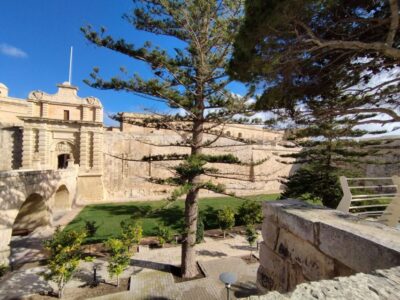 ★ 4.8Mdina and Rabat: Guided City Walking TourFrom $24549 reviews
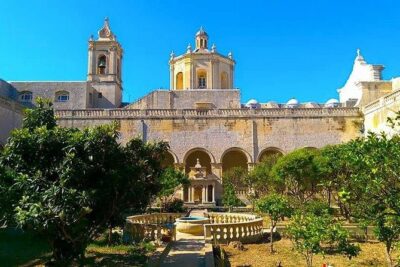 ★ 5.0Mdina and Rabat Insider’s TourFrom $24528 reviews
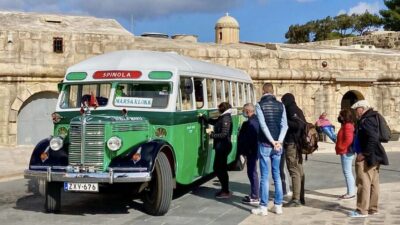 ★ 4.1Valletta: Vintage Bus to Valletta, Sliema, Rabat & MdinaFrom $9433 reviews
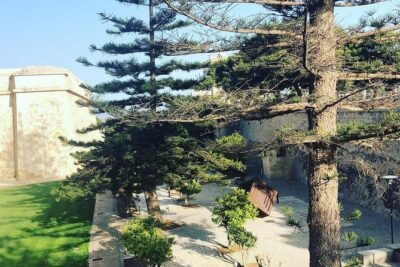 ★ 5.0Mdina and Rabat Walking Tour inc. Catacombs and St. Paul’s GrottoFrom $30341 reviews
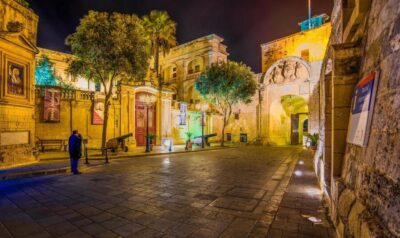 ★ 4.3Mdina: Valletta Waterfront Area, Mdina, and Rabat Night TourFrom $41302 reviews
Browse the lists this tour appears in