
Reviewed · VALLETTA WALKING TOURS
The Dark History of Valletta – Walking Tour
Valletta can look like postcard stonework, but this walking tour flips the script and shows the darker stories living in the streets. You’ll hear grim legends and eerie details tied to Malta’s capital, told at a walking pace that makes the time fly.
What I really liked was the storytelling flow and the way it links each spooky moment to a real place in Valletta. I also appreciate that you don’t need to be an expert to enjoy it, because the guide keeps the plot moving and the history understandable, with Mario mentioned by name in one of the reviews.
One thing to plan for: Valletta is hilly. The route includes going down and back up, so you’ll want decent walking fitness.
In This Review
- Key Highlights You’ll Actually Feel During the Walk
- Two Hours of Dark Stories in Valletta’s Streets
- Where You Meet (Tritons’ Fountain) and Where You Finish (Grand Master’s Palace)
- Oliver Starkey and the Art of Suspense on a Hill Walk
- The Church Story That Makes You Look Twice
- Jean de Valette and the Truth Behind the Founder Story
- The Grotesque Statue Above: Why Looking Up Matters
- Mario’s Storytelling: Engaging, Organized, and Human
- Price and Value: What $24.03 Buys You
- Timing, Weather, and Comfort Tips (So You Don’t Dread the Hills)
- Who This Tour Is Best For
- Should You Book the Dark History of Valletta Walking Tour?
- FAQ
- How long is The Dark History of Valletta walking tour?
- What language is the tour offered in?
- How much does the tour cost?
- Where do I start the tour?
- Where does the tour end?
- Do I need to print a ticket?
- Is admission included?
- What is the group size limit?
- What is the cancellation and weather policy?
Key Highlights You’ll Actually Feel During the Walk
- Cliffhanger pacing that keeps you moving to the next stop without feeling rushed
- Dark legends tied to specific locations in Valletta, not just general spooky talk
- Small-group size (maximum 35) that helps the guide keep the energy up
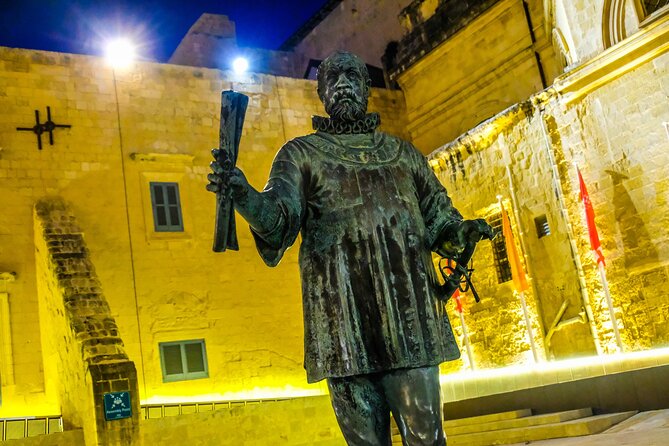
- Grotesque statue viewing angle where you look upward at what’s watching over the city
- Real guide follow-through, including regrouping if people are delayed due to traffic
More Valletta walking tours we have followed through the old streets
- Valletta: Guided Walking Tour with Optional Cathedral Tour
★ 4.3 · 758 reviews - The Valletta Street Food and Culture Walking Tour
★ 5.0 · 711 reviews - Valletta: Vintage Bus to Valletta, Sliema, Rabat & Mdina
★ 4.1 · 433 reviews - Valletta Segway Tour and The Malta Experience
★ 5.0 · 397 reviews
Two Hours of Dark Stories in Valletta’s Streets
This is a compact, high-impact walking tour: about 2 hours in Malta’s capital, offered in English, and sold at $24.03 per person. For the price, the best part is that you’re not just getting facts—you’re getting a guided narrative tied to where you’re standing.
The tour style is meant to be heard while you walk. You’ll move through Valletta’s streets as the stories unfold, which is the easiest way to understand how the city’s layout and landmarks shape what people remember.
If you like walking tours that focus on atmosphere—story first, detail second—this one fits. If you want a museum-style lesson with dates on every corner, you might feel it’s more like a guided tale than a lecture.
Where You Meet (Tritons’ Fountain) and Where You Finish (Grand Master’s Palace)
You start at Tritons’ Fountain, located at Vjal Nelson, Il-Furjana, Malta. That meeting point matters because it gets you into the city with a clear landmark from the start, so you’re not wandering to find the group.
The tour ends at the Grand Master’s Palace area in Valletta, right where you can keep going after the walking portion. In practical terms, it’s a strong finish point because bars and restaurants are close by, so you can turn your tour into dinner plans without a long commute.
Expect to do real walking during those two hours. Valletta’s hills are part of the experience, but they’re also the main reason you should wear comfortable shoes.
Oliver Starkey and the Art of Suspense on a Hill Walk
The tour’s first big stretch focuses on Valletta’s streets and three types of dark storytelling: ghostly trouble, romantic obsession, and sudden disappearance. The names and scenes are designed to sound like they belong to the city—and in my view, that’s what makes this tour work.
Here’s what you’ll hear:
- how the ghost of a 16th-century knight, Oliver Starkey, allegedly threw parties in the 1990s
- a shocking letter sent by a lovesick man to his lover shortly before he murdered her
- and why over a hundred boys entered a church but never came out
That last one is the kind of story that makes you look at a building differently. Instead of seeing it as just architecture, you start to think about how fear and rumor can take over the meaning of a place.
And the way it’s delivered matters. One review highlights how Mario shaped each story into a cliffhanger, holding the punch until the next stop. That technique turns the walk into momentum, so the time passes without feeling like you’re trudging through someone else’s script.
More Valletta ghost and dark history walks we have crept through after dark
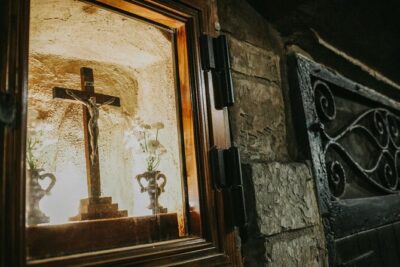
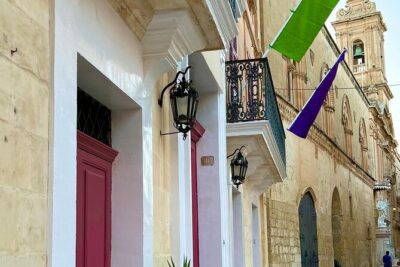
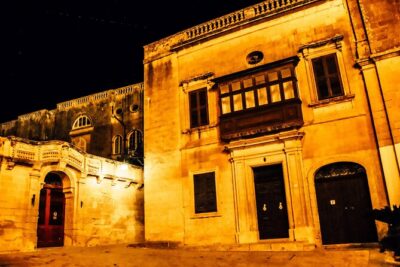
The Church Story That Makes You Look Twice
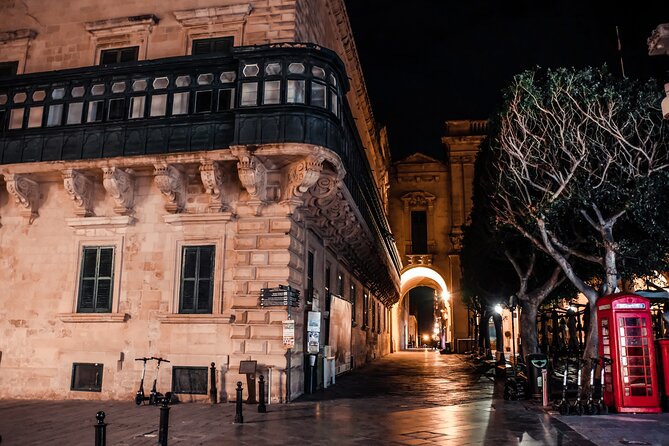
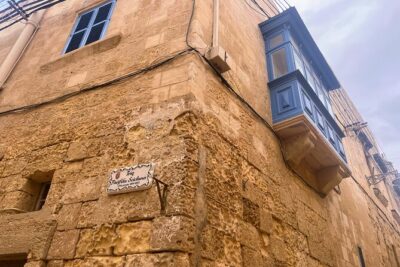
A story about a church can go two ways on a tour: either it becomes vague spooky talk, or it becomes a reason to pay attention to what you’re seeing. This one leans toward the second option.
When you hear about the boys entering and not returning, you naturally slow down and scan the facade and surrounding streets. Even if you don’t know the legend beforehand, your brain starts asking practical questions: Where would people enter? Where would they gather? What exits are visible? That’s a useful way to experience a city, because it makes the setting feel real.
If you’re the kind of person who gets antsy with long, dramatic legends, you’ll probably still be okay here because the tour is paced across the walk. It keeps switching scenes instead of parking you in one creepy topic for too long.
Jean de Valette and the Truth Behind the Founder Story
The tour also brings you back to Malta’s founding narrative with Jean de Valette, credited with founding Valletta. Instead of treating him like a distant name in a guidebook, you’ll hear how the story connects to what you see around you.
For me, this is a smart mix. You get spooky elements, but you also get a path back to the city’s origin. That balance prevents the tour from feeling like a single-note scare-fest.
It also gives you a way to interpret what you’re looking at later on your own. After the tour, when you see references to the city’s beginnings, you’ll have a clearer mental thread tying it all together.
The Grotesque Statue Above: Why Looking Up Matters
One of the most specific things you’ll learn is the meaning behind a grotesque statue that watches over the people of Valletta, positioned right above where you’ll be walking. This is one of those details you can miss when you’re just sightseeing, because your eyes are usually at street level.
Here’s the practical value: you’ll know what to look for. You’ll probably raise your head more often after this, because you’ll start spotting other symbolic bits that were previously just decoration.
This is also where the tour’s storytelling style pays off. When the guide explains hidden meanings, you’re not just memorizing trivia—you’re training your eyes. Valletta becomes easier to read, even if you never take another tour.
Mario’s Storytelling: Engaging, Organized, and Human
From the reviews, the standout praise is the guide experience—specifically Mario. People mention that he’s an exceptional storyteller and that his approach builds stories step-by-step.
One detail I found especially reassuring: when a family running late due to traffic couldn’t immediately reach the group, Mario stayed in contact and waited. That meant late arrivals still got included, while Mario used the delay to share additional stories with the rest of the group.
That tells you something about how the tour is run. A good walking tour isn’t just about having great material—it’s about managing time and attention so the experience stays smooth even when Malta traffic happens.
If you care about the “how” as much as the “what,” this is a big reason to consider booking.
Price and Value: What $24.03 Buys You
At $24.03 per person for about 2 hours, this isn’t a high-cost add-on. The value comes from three things:
- you get a structured route through central Valletta
- you get multiple separate story topics, not one long monologue
- you’re paying for guide-led storytelling, which is the main product here
Also, the tour has a maximum group size of 35 travelers, which helps keep it from turning into a crowded shuffle. A small group doesn’t guarantee a perfect experience, but it does make it easier for the guide to keep everyone on track.
If you’re planning a short trip and want something memorable without losing half a day, this is a clean fit.
Timing, Weather, and Comfort Tips (So You Don’t Dread the Hills)
This tour requires good weather. If the weather is poor, you’ll be offered a different date or a full refund.
Now for the real on-the-ground consideration: Valletta is hilly. One review notes you walk down to a lower area and back up again, and that it’s best to be mobile and reasonably fit. This isn’t a slow stroll, so go with walking shoes you can trust.
My practical advice:
- Wear comfortable, grippy shoes for slopes and uneven stone.
- Bring a light layer if the evening air cools down, since you’ll be outside for the full walk.
- If you’re traveling with anyone who gets tired on hills, plan to pace yourself and take the stops seriously—don’t treat them like quick photo breaks.
The upside? Reviews describe the two hours as not tiring when the guide’s pacing is strong. When the storytelling is engaging, the hills feel like part of the route rather than a punishment.
Who This Tour Is Best For
I’d recommend this tour if you want:
- a walking experience that feels like a story, not a lecture
- a guided way to see Valletta’s most famous parts with extra meaning
- spooky legends mixed with origin facts, including Jean de Valette
It’s also a good fit for couples and small groups who want something different from the usual “look at this building” sightseeing. And if you’ve been to Valletta before, you’ll likely like it even more, because it adds details you might miss on your own.
If you strongly dislike ghost stories, murders, or grim legends in general, you may find the tone heavy. It’s a dark-history concept, so the vibe isn’t meant to be light.
Should You Book the Dark History of Valletta Walking Tour?
If you’re curious about Valletta beyond architecture and want a guide to point out what you should notice, I think booking makes sense. The standout reason is the storytelling craft, with Mario highlighted for engaging pacing and for handling latecomers smoothly.
The main reason to hesitate is physical comfort. If hills are a problem for you, this route may feel like too much for a two-hour walk.
My recommendation: book it if you can walk hills comfortably and you like a guided narrative. Skip it if you want a gentle, totally factual stroll with minimal spooky material.
FAQ
How long is The Dark History of Valletta walking tour?
The tour lasts about 2 hours.
What language is the tour offered in?
The tour is offered in English.
How much does the tour cost?
The price is $24.03 per person.
Where do I start the tour?
The start point is Tritons’ Fountain at Vjal Nelson, Il-Furjana, Malta.
Where does the tour end?
The tour ends near the Grand Master’s Palace in Valletta, close to bars and restaurants.
Do I need to print a ticket?
No. The tour uses a mobile ticket.
Is admission included?
The admission ticket is listed as free.
What is the group size limit?
The tour has a maximum of 35 travelers.
What is the cancellation and weather policy?
You can cancel for a full refund up to 24 hours in advance. The experience requires good weather, and if it’s canceled due to poor weather, you’ll be offered a different date or a full refund.
More Tour Reviews in Malta





More Valletta Ghost & Dark History Walks


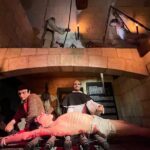
More Valletta Walking Tours
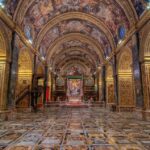



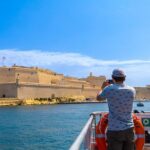

Wondering what else is on? More Malta and Gozo trips from our own notebook






Valletta Walking Tours, compared.
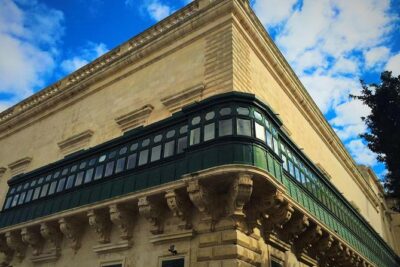 ★ 5.0The Original Valletta Walking TourFrom $262,719 reviews
 ★ 4.7Valletta: 3-Hour Walking TourFrom $251,605 reviews
 ★ 4.8Valletta: Guided City Walking TourFrom $241,256 reviews
 ★ 4.8Valletta: Street Food and Culture Walking TourFrom $651,251 reviews
 ★ 4.9Valletta: City Walking Tour in a Small GroupFrom $24957 reviews
 ★ 4.3From Sliema: Valletta and the Three Cities Scenic CruiseFrom $24763 reviews
 ★ 4.3Valletta: Guided Walking Tour with Optional Cathedral TourFrom $46758 reviews
 ★ 5.0The Valletta Street Food and Culture Walking TourFrom $66711 reviews
Browse the lists this tour appears in