
Reviewed · VALLETTA WALKING TOURS
Valletta: 3-Hour Walking Tour
Valletta rewards anyone who walks slowly. This 3-hour walking tour pairs major landmarks with calmer side streets, so you get both the big picture and the small details. One of the best parts is the way the route turns into a constant payoff, from church façades to waterfront views.
I particularly like the licensed guide experience. Guides such as Matthew, Carmel, Marija, Maria, and Giulia are consistently praised for clear explanations, good pacing, and answering questions without turning it into a lecture. You also get strong visual moments, like the Grand Harbour view point from Upper Barrakka Gardens.
One heads-up: this is an English live tour and it covers a lot of ground on narrow streets. If your English listening skills are still developing, the explanations may move faster than you’d like.
In This Review
- Key highlights worth aiming for
- Walking Valletta’s highlights without getting lost in the details
- Where the tour starts: Parliament area and Valletta’s quick orientation
- Royal Opera House: a cultural stop that changes the tone
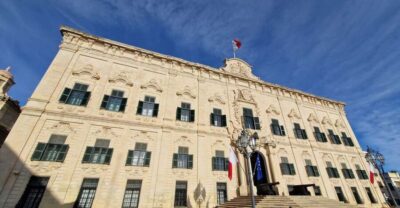
- Auberge de Castille: the Knights-era power vibe (and why it matters)
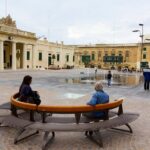
- Pjazza Jean de Vallette: connecting street corners to the big story
- Church of Our Lady of Victory: the faith and the façade
- Upper Barrakka Gardens: the harbor view that justifies the walking
- Palazzo Parisio: switching from knightly grandeur to refined Malta
- St. John’s Co-Cathedral: the façade that deserves your attention
- Republic Street and the Courts of Justice: modern civic Valletta
- St. George’s Square and Fort St Elmo area: finishing with perspective
- Price and value: why $25 can work well here
- Who this tour suits best (and who might want a different option)
- Quick practical tips before you go
- Should you book the Valletta 3-Hour Walking Tour?
- FAQ
- How long is the Valletta walking tour?
- How much does the tour cost?
- Where do I meet the guide?
- Where does the tour end?
- Is there a live guide?
- Is the tour wheelchair or accessibility friendly?
- Are entrance fees included?
- Do I need hotel pickup or drop-off?
- What should I bring?
- Is the tour offered in English?
- Is there free cancellation or flexible booking?
Key highlights worth aiming for
- Grand Harbour view from Upper Barrakka Gardens, plus the Siege Bell Memorial area
- St John’s Co-Cathedral and its famous façade, framed in the story of the Knights
- Auberge de Castille and the feeling of Valletta’s power and patronage under the Order
- The controversial new parliament building by Renzo Piano, set against the older city fabric
- Palazzo Parisio stop, adding a different style of elegance to the walk
More Valletta walking tours we have followed through the old streets
- Valletta: 3-Hour Walking Tour
★ 4.7 · 1,605 reviews - Valletta: Guided City Walking Tour
★ 4.8 · 1,256 reviews - Valletta: Street Food and Culture Walking Tour
★ 4.8 · 1,251 reviews - Valletta: City Walking Tour in a Small Group
★ 4.9 · 957 reviews
Walking Valletta’s highlights without getting lost in the details
Valletta is small, but it’s not simple. Buildings stack up in layers, streets twist, and the city can feel like a set made of stone—beautiful, but easy to misread if you’re just wandering. This 3-hour tour is designed to solve that problem. You’ll start in a modern hub and then keep moving into the historic center, so the city’s “then and now” story lands quickly.
Think of it like getting handed a clear map in real time. You don’t just see places—you learn why they’re there and what they signaled. And because the tour is short, you’re not spending your whole day trudging between stops. At the same time, it’s not a rushed “photo sprint.” You get breaks and guided time at the bigger moments, which matters if you actually want to remember what you saw.
For the price (about $25 per person), the value comes from one thing: you’re paying for a licensed guide to connect the dots between architecture, institutions, and the Knights-era legacy tied to Jean de Valette. Entrance fees are not included, so you’ll still decide what’s worth paying to go inside. But even without extra tickets, the outdoor viewing and explanation can be a strong first “orientation” tour.
Where the tour starts: Parliament area and Valletta’s quick orientation
You meet your guide at the bottom of the steps next to the Parliament of Malta near the Valletta City Gate. That’s a smart starting point because it puts you right on the edge of Valletta’s living city, not out in some quiet parking lot.
From the first stop, you’re already in the big contrast that makes Valletta interesting: today’s institutions in the same space as older prestige and power. The tour even calls out the new parliament building by Renzo Piano as a talking point. Love it or not, it’s the kind of landmark that helps you see Valletta as a city that’s still evolving, not frozen in time.
If you like tours that begin with a “why this matters” moment instead of a basic “walk and point,” you’ll appreciate how this one sets the tone early.
Royal Opera House: a cultural stop that changes the tone
Next up is the Royal Opera House, Valletta. This is one of those places that can look impressive from the sidewalk, but on its own it might not tell you much. With a guide, you’re not stuck guessing. You learn how culture and public buildings fit into the city’s identity—especially when you’re about to transition into the architecture of the Knights.
What I like about including a cultural landmark here is pacing. After the modern parliament context, the opera house helps you soften into the city rather than jumping straight into “museum mode.” It also gives you a useful reset: look at shape, entrances, and façade details before the guide starts bringing in the older, more formal structures.
Practical note: Valletta streets can be uneven and busy around main squares. Comfortable shoes are not optional.
More Maltese Islands walks through the honey-stone streets

Auberge de Castille: the Knights-era power vibe (and why it matters)
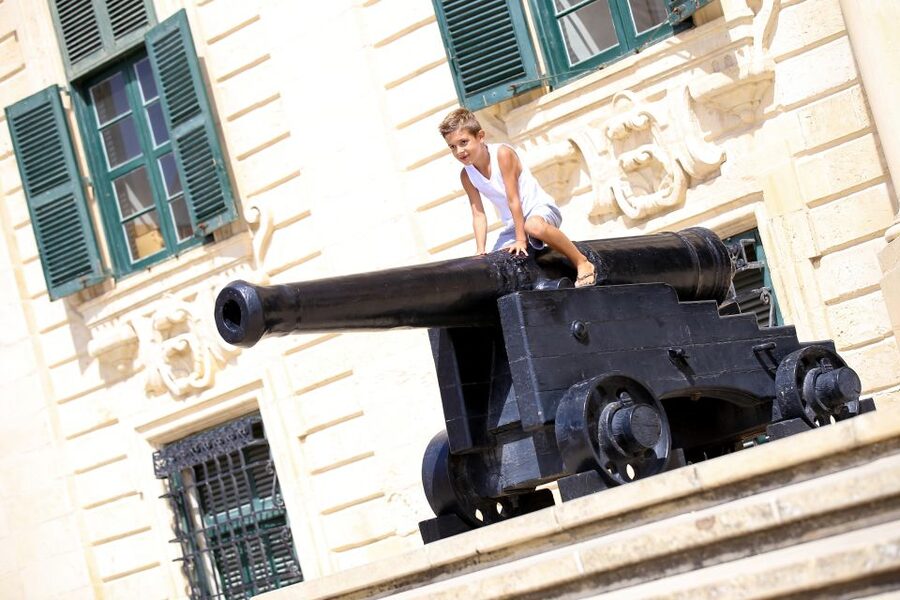
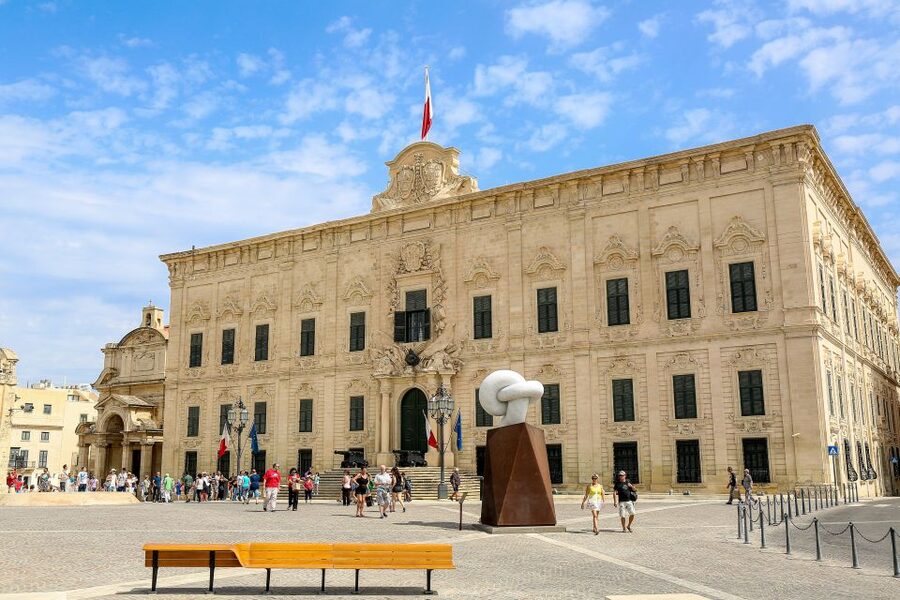
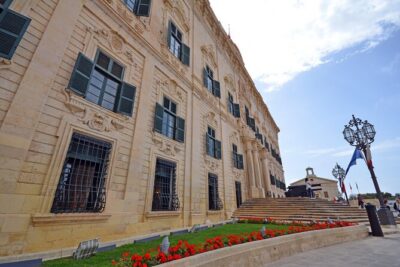
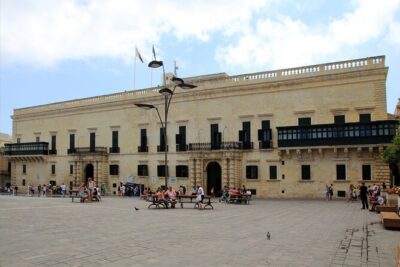
Then you move to Auberge de Castille (Castile). An auberge isn’t just a building name you nod at—it’s tied to the Knights of St. John and the way different groups were housed and organized. When your guide explains the function and symbolism, the façade stops being “pretty stone” and starts becoming a clue.
This stop also sets up the rest of the route, because the tour keeps returning to how different eras speak to each other. You’re walking through the capital’s layers, and this is where that layering starts to feel real.
If you care about architecture as a language (not just visuals), this is one of the best stops. Even if you skip paid entry to anything, you’ll still come away with a clearer sense of what the Knights-era presence meant in daily city life.
Pjazza Jean de Vallette: connecting street corners to the big story
From there you head to Pjazza Jean de Vallette. Squares are where Valletta often “thinks out loud.” They give you space to look around, and they’re useful for a guide to frame the broader story: who Jean de Valette was, why the Knights-era decision-making shaped the city, and how modern streets still carry that imprint.
I like this kind of pause because it gives your brain something to hold onto. You’ve been walking; now you get a moment to orient your mental map.
You’ll also notice how the tour alternates between guided explanation and simply walking the streets. That balance is key in Valletta, where turning a corner can reveal the next important landmark in seconds.
Church of Our Lady of Victory: the faith and the façade
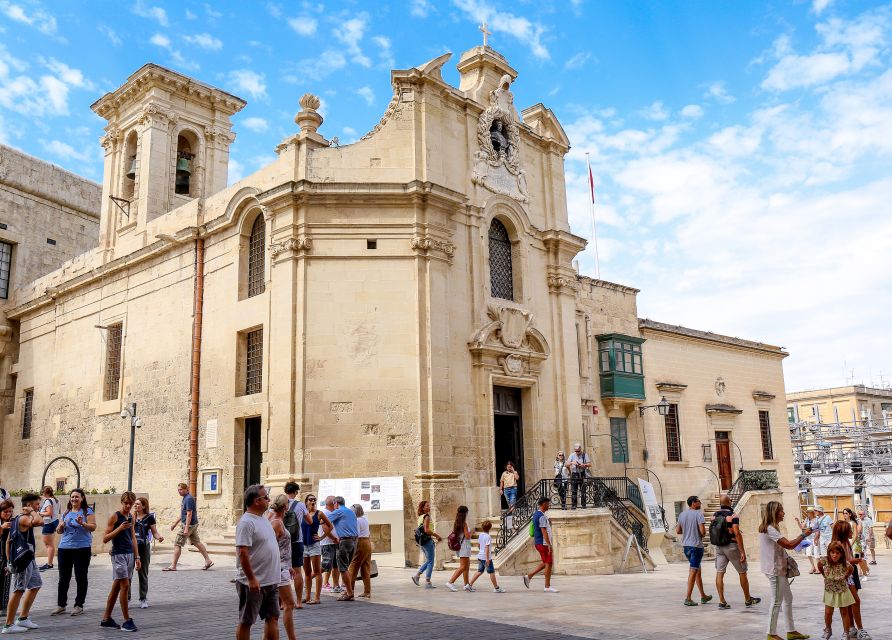
Stop 5 is the Church of Our Lady of Victory. You’ll get a guided visit here, which matters because churches can be visually loud but historically vague if you’re flying blind. Your guide helps you read the façade and understand the place in the wider story of Malta and Valletta.
This stop also gives the tour a “human scale” moment. It’s not just civic power or architecture as status. It’s a place of devotion, and that changes how you interpret the rest of the city.
Drawback to consider: like most historic centers, churches and streets may mean you’ll need to keep your pace steady and watch your footing. If you prefer long, slow stops, you might wish you had more time inside certain sites—but at 3 hours, this tour makes smart trade-offs.
Upper Barrakka Gardens: the harbor view that justifies the walking
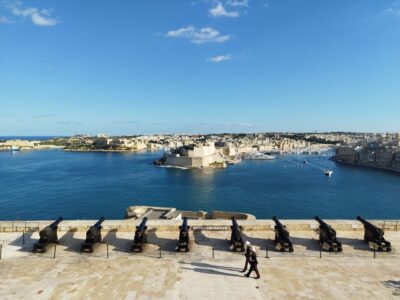
Next comes Upper Barrakka Gardens, with a break time and scenic viewing along the way. This is where the tour pays you back in a big way: the stunning view of the Grand Harbour. It’s the kind of view that makes you stand still even if you’re not a “views person.”
Also look for the Siege Bell Memorial area here. That detail adds depth to the stop. It’s not only about postcard scenery; it also connects your eyes to Valletta’s long relationship with conflict, defense, and survival as part of the island’s story.
This is a good moment to catch your breath, take photos, and mentally line up what you’ll see next. After a view like this, the rest of the walk feels less like random sightseeing and more like a guided “tour of perspective.”
Palazzo Parisio: switching from knightly grandeur to refined Malta
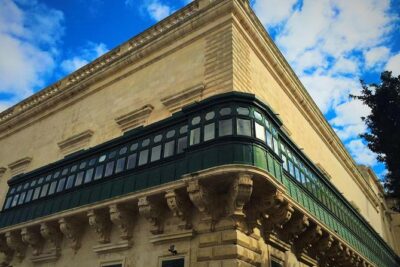
The next named stop is Palazzo Parisio, Valletta. This gives the walk a change in flavor. Instead of staying strictly in Knights-era cues, you see another form of elegance and influence—helpful if you’re trying to understand Valletta as a living capital rather than a single historical chapter.
A palazzo stop also works because it’s easier to appreciate with context. Your guide helps point out what to notice, so you’re not just scanning for “pretty windows,” even though you will probably do that too.
If you like architecture, this is a solid mid-to-late tour anchor. It keeps the momentum from turning into a blur.
St. John’s Co-Cathedral: the façade that deserves your attention
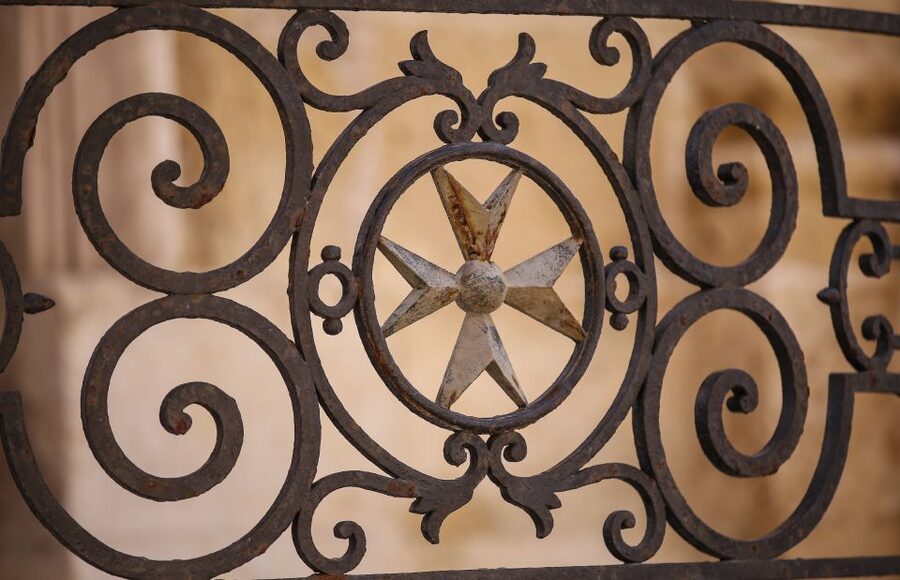
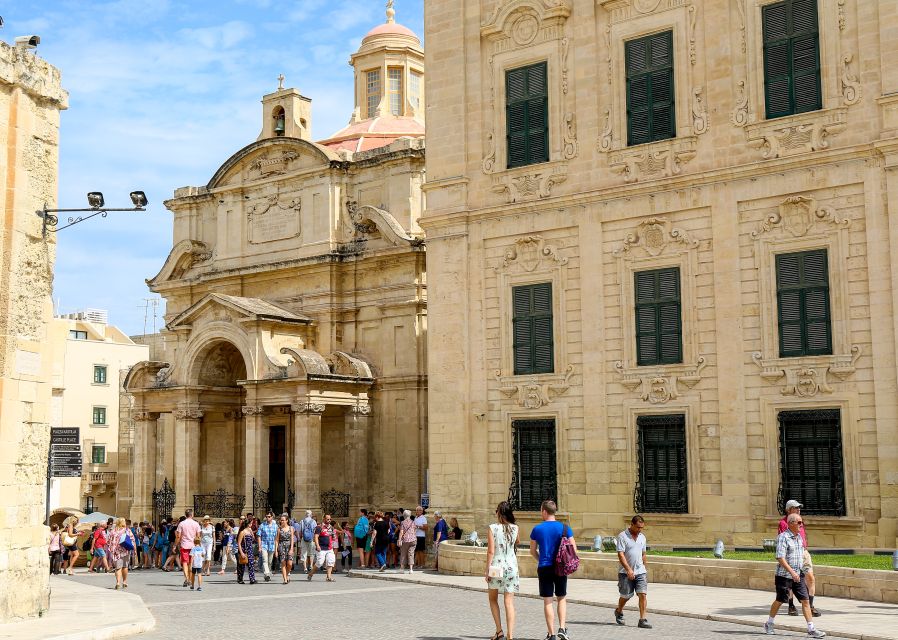
One of the big draws is St. John’s Co-Cathedral. The tour highlights the façade of St John’s Co-Cathedral, and your guide will walk you through why it’s such a signature moment in Valletta.
Co-cathedrals like this aren’t built to be quiet. When someone explains the story behind the space and the institution, the façade becomes more than a landmark. It’s a visual statement of status, belief, and identity tied to the Knights.
What I like about placing this stop later in the route is attention. Early on, you’re still calibrating; by the time you reach the cathedral, you’re ready to zoom in mentally and actually absorb the meaning.
If you’re deciding whether to pay entrance fees, this is usually the type of place where the extra time can be worth it—especially if the guide’s explanation makes you curious about what’s inside.
Republic Street and the Courts of Justice: modern civic Valletta
After the cathedral, the tour includes Republic Street as a pass-by and then heads to the Courts of Justice building for a guided component.
This part might not look as dramatic as a cathedral from the outside, but it can be surprisingly useful. It helps you see Valletta as a current-day capital with functioning institutions, not just a heritage theme park. It also gives your guide room to talk about how the city continues to operate and govern itself within the older setting.
I like this section because it prevents the walk from becoming a one-note sequence of monuments. You start to see how Malta’s present day sits on top of the past.
St. George’s Square and Fort St Elmo area: finishing with perspective
Then you visit St. George’s Square, followed by a pass by the National War Museum – Fort St Elmo area. The museum is included as a pass-by rather than a full stop, which suggests the tour is keeping its promise: cover major sights in 3 hours without turning into a long museum day.
St. George’s Square helps you close the loop spatially. It’s a point where the city feels easy to “read” from one broader viewpoint, and your guide can wrap up themes you’ve already encountered.
Finally, the tour ends back at the waterfront area near Lower Barrakka Gardens. If you want one last look before you move on, this is usually a smart place to do it. Lower Barrakka gives you that “Valletta’s still connected to the sea” feeling right at the end.
Price and value: why $25 can work well here
At $25 per person for a 3-hour walking tour, the value is strong if you’ll use the guide time. The guide is included, and you’ll get guided visits at key stops plus breaks and scenic time at Upper Barrakka Gardens.
Here’s where the math gets friendly:
- You’re paying for guided interpretation, not just walking from sign to sign.
- The route covers a mix of architectural highlights (cathedral, auberge, palazzo) and city institutions (parliament, courts).
- Entrance fees are not included, so you can choose your level of spending. If you skip paid entries, you’re still buying a structured way to understand what you’re seeing.
The main cost risk is your own curiosity. If you decide to add tickets at multiple sites, your total spend goes up. But that’s common in Valletta, and it’s your choice.
Who this tour suits best (and who might want a different option)
This tour is a great fit if you:
- Want a 3-hour way to get oriented fast in Valletta
- Enjoy architecture and want it explained in plain terms
- Like harbor views and want them built into the route (not as an accidental detour)
- Prefer a live guide in English and are okay walking on uneven historic streets
It might be less ideal if:
- You want a longer, slower day with long indoor museum time
- You struggle with English spoken explanations during movement and frequent stops
Quick practical tips before you go
- Wear comfortable shoes. You’ll be walking through narrow streets and around major plazas.
- Bring water if you run hot. Upper Barrakka Gardens is a break point, but it’s still outdoors and sunny.
- If you’re planning to enter sites, budget for entrance fees, since they’re not included.
Should you book the Valletta 3-Hour Walking Tour?
If you’re visiting Valletta for the first time and want the city’s highlights connected into a story, I’d book it. The short length is its superpower: you get major landmarks, a strong view from Upper Barrakka Gardens, and a guide who can explain what you’re actually looking at.
I’d skip it only if you already have a strong plan and want to self-guide every stop with your own reading. Otherwise, for $25 and a licensed English guide, this is one of the smarter ways to get real understanding fast—without turning your day into a marathon.
FAQ
How long is the Valletta walking tour?
It lasts about 3 hours.
How much does the tour cost?
The price is $25 per person.
Where do I meet the guide?
Meet your guide at the bottom of the steps next to the Parliament of Malta near the Valletta City Gate.
Where does the tour end?
The tour finishes at Lower Barrakka Gardens.
Is there a live guide?
Yes. The tour includes a licensed, live English-speaking guide.
Is the tour wheelchair or accessibility friendly?
No accessibility details are provided in the tour information, so you should plan for a walking experience on city streets.
Are entrance fees included?
No. Entrance fees are not included.
Do I need hotel pickup or drop-off?
No. Hotel pickup and drop-off are not included.
What should I bring?
Wear comfortable shoes for a 3-hour walking tour.
Is the tour offered in English?
Yes, it’s listed as an English-language tour.
Is there free cancellation or flexible booking?
Free cancellation is available up to 24 hours in advance for a full refund, and you can reserve now & pay later to keep plans flexible.
More Tours in Valletta




More Tour Reviews in Valletta
More Valletta Walking Tours



Wondering what else is on? More Malta and Gozo trips from our own notebook




Valletta Walking Tours, compared.
 ★ 5.0The Original Valletta Walking TourFrom $262,719 reviews
 ★ 4.8Valletta: Guided City Walking TourFrom $241,256 reviews
 ★ 4.8Valletta: Street Food and Culture Walking TourFrom $651,251 reviews
 ★ 4.9Valletta: City Walking Tour in a Small GroupFrom $24957 reviews
 ★ 4.3From Sliema: Valletta and the Three Cities Scenic CruiseFrom $24763 reviews
 ★ 4.3Valletta: Guided Walking Tour with Optional Cathedral TourFrom $46758 reviews
 ★ 5.0The Valletta Street Food and Culture Walking TourFrom $66711 reviews
 ★ 5.0Valletta Food TourFrom $60711 reviews
Browse the lists this tour appears in