
Reviewed · MDINA & RABAT TOURS
Mdina and Rabat Private Walking Tour
Mdina feels like a living set of stone. This private guide walk is one of the easiest ways to understand why Malta’s old capital still looks and sounds so different, even after Phoenicians, Romans, Arabs, and Normans left their mark. I love how the guide ties streets, architecture, and religion into a clear story, and I especially like the pacing for a group of up to four. One thing to plan for: it’s a walking route with narrow, old-stone lanes, and some museum-style stops may cost extra on-site.
You’ll meet at the Mdina Main Gate at a time that fits your day, follow the circuit through Mdina’s biggest landmarks, and finish at Greek’s Gate. No hotel pickup, no food included, and you’ll want comfortable shoes—this is made for strolling, not hopping in and out of taxis.
In This Review
- Quick reasons this Mdina and Rabat private walk is worth it
- A 2-hour private walk inside Malta’s silent old city
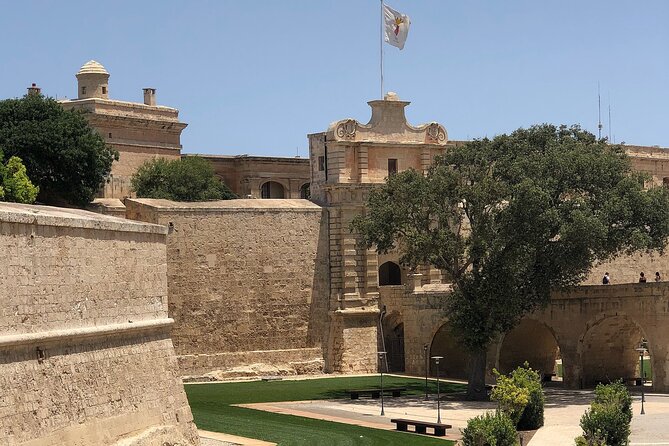
- Starting at Mdina Main Gate: the Baroque gateway with real attitude
- Following the layers of rulers: why the streets feel different
- Church St. Agatha and the legend thread that ties the visit together
- Inguanez Street and the noble-house contrast
- Pjazza Mesquita and Banca Giuratale: places that feel modern in an old shell
- St. Paul’s Cathedral Museum and Palazzo Falson: when to budget for extra tickets
- Bastion Square for the big panorama pause
- Carmelite Priory and Palazzo Santa Sofia: the spiritual and the oldest stones
- The finish at Greek’s Gate: ending where history still passes through
- What the guide really changes about your experience
- Price and value: paying for private time in a compact city
- Who should book this Mdina and Rabat private walking tour
- Should you book it? My take
- FAQ
- FAQ
- Where does the tour start and end?
- How long is the Mdina walking tour?
- What’s included in the price?
- Is hotel pickup included?
- Are food and drinks included?
- Are any admissions included?
- Is the tour only for adults?
- Is this tour wheelchair-friendly?
- What if I need to cancel?
Quick reasons this Mdina and Rabat private walk is worth it
- A true private format for up to 4 people, so questions and slow spots don’t derail the visit.
- History with names and places, walking you past key Mdina landmarks like the Church of St. Agatha and Banca Giuratale.
- Excellent first-time orientation for Mdina’s layout, viewpoints, and the meanings behind the buildings.
- Old-town filming points, including a stop at Pjazza Mesquita tied to TV scenes.
- Strong guide storytelling, with reviews calling out guides like Mario and Matthew for making details click.
- Ends at Greek’s Gate, helping you keep your day moving without backtracking.
More Mdina and Rabat tours we have wandered the silent city on
- Mdina and Rabat: Guided City Walking Tour
★ 4.8 · 549 reviews - Malta: Mdina and Rabat Tour with Local Guide
★ 5.0 · 408 reviews - Mdina and Rabat Walking Tour inc. Catacombs and St. Paul’s Grotto
★ 5.0 · 341 reviews - Mdina and Highlights of Malta Full Day Guided Tour Incl. Lunch and Transfers
★ 4.0 · 299 reviews
A 2-hour private walk inside Malta’s silent old city
This is a tight, smart-length tour: about 2 hours on foot through Mdina. The price is $337.34 per group (up to 4), which works out best when you’re traveling with friends or family who also want a guided pass at the main sights. If you’re solo, it’s still doable, but you’ll feel the “private” cost more than the “group” value.
What I like is the way the tour is built for clarity. Instead of treating Mdina like a checklist, the guide connects the city’s layers—old rulers, religious sites, noble houses, and the big viewpoints—so you leave with a mental map, not just photos.
The only real caution is the walking itself. Mdina’s streets are narrow and uneven in places, and while the tour is generally for most travelers, it’s not designed for wheelchairs or heavy mobility gear based on what you’ll be dealing with underfoot.
Starting at Mdina Main Gate: the Baroque gateway with real attitude
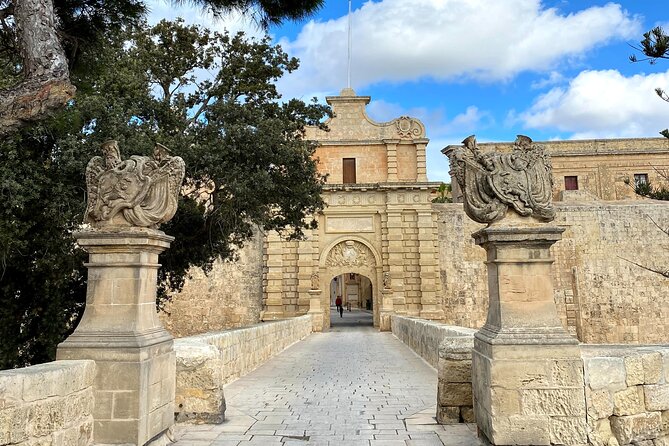
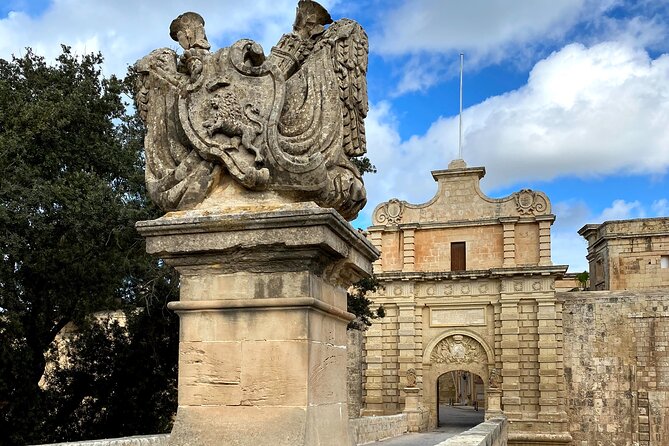
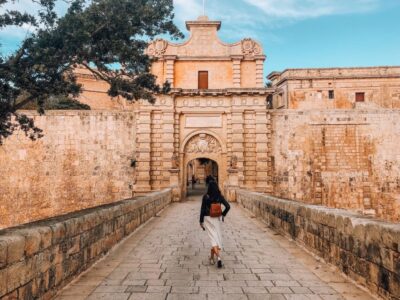
The tour begins at Mdina Main Gate, a Baroque gateway that instantly signals you’re entering a place with big-city ambitions—only in a compact old-world package. Meeting here is also convenient for orientation: you start right where most people begin their first look at Mdina, so you don’t waste time hunting down an off-lane meeting point.
This first stop matters because it frames what comes next. The guide can set the tone quickly: Mdina isn’t just scenic; it was shaped by different powers over time, and that history is still visible in how buildings sit, how streets curve, and how key landmarks relate to one another.
Following the layers of rulers: why the streets feel different
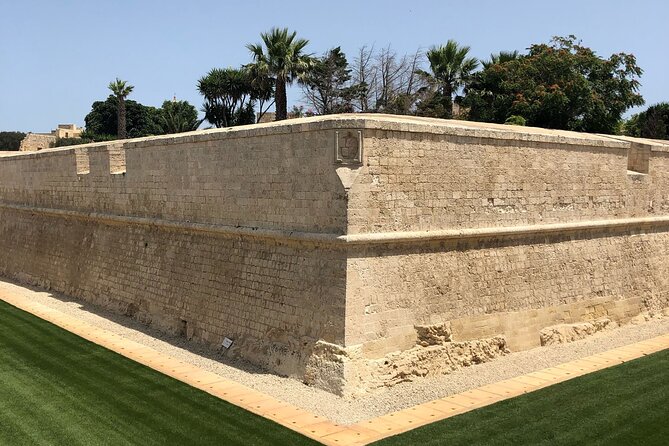
One of the most interesting parts is the way the route mirrors Malta’s changing rule periods. You’ll walk narrow, winding lanes that reflect the influence of Phoenicians, Romans, Arabs, and Normans—not as a trivia list, but as part of how the city developed its identity.
Along the way, you’re guided past major anchors of the Old City experience: prominent palaces, churches, and administrative-era buildings. The guide’s job is to help you see connections—what to look for on facades, why certain streets matter, and how religious landmarks fit into the social and political life of Mdina.
This is also where the “private” part earns its keep. In reviews, guides like Mario are praised for covering not only history and architecture, but also things like geography and linguistics—so the city doesn’t stay stuck in the past. And Matthew is noted for meeting exactly on time and adjusting patiently when a family member needed extra time due to walking problems.
More Maltese Islands walks through the honey-stone streets


Church St. Agatha and the legend thread that ties the visit together
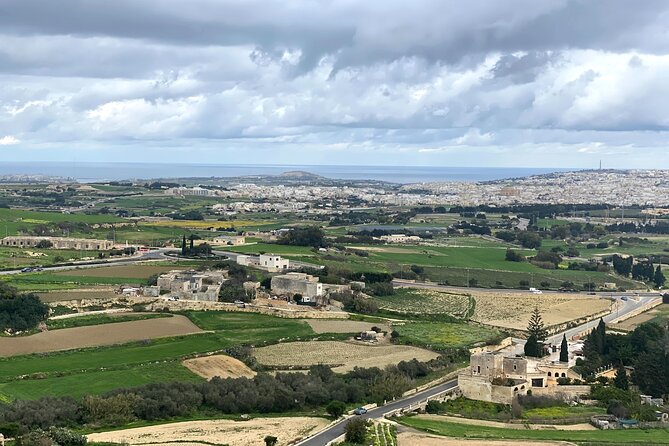
A key emotional stop is Church St. Agatha (Sant’ Agatha). The tour is set up so you’re not just looking at stonework; you’re hearing the legend of how Mdina was saved from tragedy. You’ll spend about 10 minutes here, and the guide will use the story to explain why this church matters in Mdina’s religious identity.
Practical note: this one is listed as a free admission stop, so it’s a great place to spend your time without thinking about ticket decisions. Also, church interiors can shift in lighting—so even if you’re not a “museum person,” this is usually a satisfying pause on a sunny day.
If you’re short on time in Mdina, I’d still aim to hit this stop early enough that you’re not exhausted. Legends land better when you’re attentive, not when you’re counting minutes.
Inguanez Street and the noble-house contrast
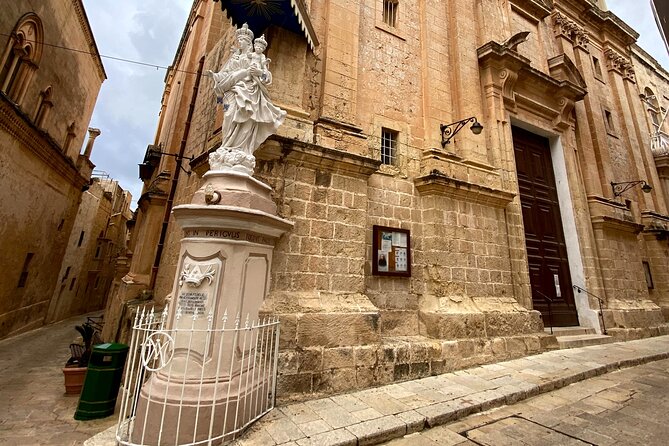
Next you’ll move to Inguanez Street, where the guide points out the Palazzo Inguanez, home to one of Malta’s oldest noble families. It’s a quick stop—about 5 minutes—but it shows you something useful: Mdina wasn’t only a fortress city and a church city. It also had wealthy families shaping what you see today.
This is where you’ll likely start noticing details you’d otherwise miss. The guide helps you look at architecture not like a pretty postcard, but like evidence of status: what got built, who built it, and how those choices show up in the street scene.
If you like architecture that tells you a story—materials, styles, and how a building announces importance—this stop does a good job of earning its short time.
Pjazza Mesquita and Banca Giuratale: places that feel modern in an old shell
Two of the tour’s most “you might recognize this” moments are Pjazza Mesquita and Banca Giuratale.
At Pjazza Mesquita, the focus is on scenes from a famous TV series that were filmed here. Even if you don’t watch much TV, this can be oddly helpful because it makes the space feel lived-in. You get a quick way to connect your memory with the location—then the guide brings it back to Mdina’s own character.
A few steps later, you reach Banca Giuratale, a former town hall with a beautiful Baroque facade. This stop gives you a window into the city as a civic center, not just a religious one. It’s another short stop, about 5 minutes, but it’s timed well because it sits between heavier history moments.
What I like about pairing these two is that the tour shifts gears. You go from filming-era recognition to governance-era architecture without the visit turning into one long lecture.
St. Paul’s Cathedral Museum and Palazzo Falson: when to budget for extra tickets
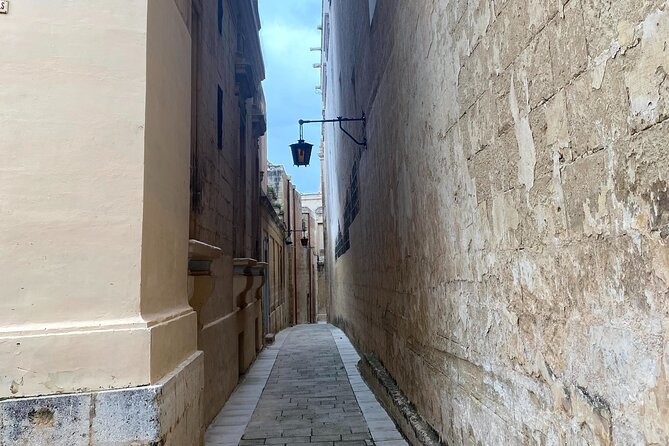
Mdina’s main spotlight landmarks include the Metropolitan Cathedral of Saint Paul and nearby museum-style sites. In the route, the cathedral stop is listed with admission not included, and it’s about 10 minutes.
This matters for value. A guided walk that highlights a cathedral from the outside can already be worthwhile. But since the cathedral museum admission isn’t included, you’ll want to decide whether you want to pay for the indoor portion during the time window. The guide’s perspective here is useful because they can point you to what’s most meaningful before you commit money and time.
Later comes Palazzo Falson Historic House Museum, also listed as admission not included. It’s about 10 minutes on the guided stop, and the focus is on the person behind setting up the house museum. Again: even if you skip the inside ticket, the tour still helps you understand why the building matters.
My practical advice: if you already know you want to see museum interiors, plan your day so you’re comfortable spending a bit more. If you prefer outside views, you can still get a lot from the guide’s explanations without turning the afternoon into a ticket marathon.
Bastion Square for the big panorama pause
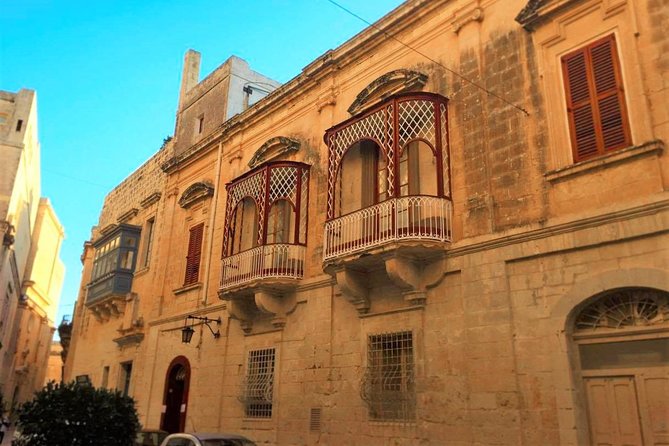
At Bastion Square, the tour shifts into viewpoint mode. You’ll spend around 10 minutes admiring the panorama from one of the highest points on the island. This stop is where Mdina changes from “a place you walk through” into “a place you look out from.”
It’s also a smart reset. After churches, palaces, and civic buildings, you get space to breathe, take photos, and orient yourself for the final stretch toward the oldest structures.
If the day is windy, the guide’s timing helps—because the viewpoint can be more comfortable when you reach it after some walking rather than immediately at the start.
Carmelite Priory and Palazzo Santa Sofia: the spiritual and the oldest stones
The route includes Carmelite Priory Mdina, the historic church dedicated to Our Lady of Mount Carmel. This stop is brief—around 5 minutes—but it adds variety. By this stage you’ve already seen major church presence, so this one helps round out the “religion as architecture” theme.
Then comes Palazzo Santa Sofia, described as the oldest still standing building in Malta. Another short stop at about 5 minutes, but it’s a big deal. When you’re staring at truly old stone, the guide’s explanations help you connect dates and cultural shifts to something physical.
Even if you only catch a glance, this is one of the stops that gives you that wow-without-trying feeling. It’s less about interior access and more about seeing age as a visible material fact.
The finish at Greek’s Gate: ending where history still passes through
The tour closes at Greek’s Gate, described as the oldest surviving gate in Mdina. Finishing here is practical because it puts you near the exit point of the old city area, so you’re ready to move on without retracing your whole route.
This last segment is also a natural way to end the story. After learning about religious buildings, civic architecture, noble houses, and city viewpoints, you end at a structure that connects Mdina’s identity to movement—who entered, who controlled, and how the city guarded its place.
By the time you reach the gate, the city usually starts to make sense as a whole. You don’t just remember the names; you remember where they sit in the flow of the city.
What the guide really changes about your experience
The guide is the difference-maker here, and the reviews make that clear. Mario is singled out for covering geography, history, linguistics, architecture, and culture, which is a wide spread for a walking tour. That kind of coverage isn’t random either. It helps you understand why place names, building styles, and cultural influences all fit together in Mdina.
Matthew is mentioned for meeting at the Main Gate exactly on time and for patience when someone in the group needed extra time because of walking issues. That tells you the tour isn’t rigid in a harsh way. The private format means the guide can flex pacing for real life.
So if your ideal tour is a calm walk where you can ask why something matters, this is a strong match. If your ideal is sprinting from one site to another with zero talking, you might find any guide-led explanation a bit much. But for most people—especially first-timers—this style is exactly the right amount of structure.
Price and value: paying for private time in a compact city
Let’s talk value honestly. At $337.34 per group up to four, this isn’t a cheap “per person” tour. But it’s priced like what it is: a private guide experience focused on key sights.
Here’s when it feels like a great deal:
- You have 2–4 people and want the guide to tailor the pace and focus.
- You want your first Mdina day to feel organized without spending extra brainpower on maps.
- You enjoy explanations that connect architecture and story, not just facts.
Here’s when you might pause:
- You’re traveling solo and you’d rather spend money on additional museum tickets or longer independent exploring.
- You already know Mdina well and mostly just want photos and viewpoints.
For first-time visitors, I think it’s the easiest way to get smart fast. Mdina’s streets can be gorgeous, but they can also blur together without context. A guide prevents that.
Who should book this Mdina and Rabat private walking tour
This tour is a great fit if:
- You’re visiting Mdina as your first stop and want the city explained in a friendly, human way.
- You’re interested in how Malta’s layers of influence show up in street layout, churches, and civic buildings.
- You want a private experience that can handle different comfort levels in your group.
It’s less ideal if:
- You want a long day with lots of ticket-based museums. Some of the museum stops listed on the route have admission not included, so you’d need to budget for those if you want them.
- You’re expecting hotel pickup or a big “transfer” element. This is a walk-first experience.
Also, since the tour is offered in English with a mobile ticket, you can feel confident you’ll understand what the guide says and keep things simple on arrival.
Should you book it? My take
If you want Mdina to make sense quickly, I’d book this. The route hits the meaningful anchors—Mdina Main Gate, St. Agatha, civic and noble sites like Banca Giuratale, and big ending points like Palazzo Santa Sofia and Greek’s Gate—and the guide turns those stops into a story you can carry with you.
The price is fair when shared, and the private format is genuinely useful in a place where the streets are narrow and your comfort level matters. If you’d rather wander on your own without any structure, you can still enjoy Mdina without a guide—but you’ll probably miss the connective tissue that makes the city click.
FAQ
FAQ
Where does the tour start and end?
It starts at Mdina Main Gate and ends at Greek’s Gate in Mdina.
How long is the Mdina walking tour?
The tour lasts about 2 hours.
What’s included in the price?
You get a professional private guide. A mobile ticket is used for the experience.
Is hotel pickup included?
No. Hotel pickup and drop-off are not included.
Are food and drinks included?
No. Food and drinks are not included.
Are any admissions included?
Some stops are free, while others list admission as not included. The tour also notes an admission ticket included for the Mdina Old City portion.
Is the tour only for adults?
Children must be accompanied by an adult.
Is this tour wheelchair-friendly?
The tour lists that most travelers can participate, but nothing specific is provided about wheelchairs. Because it’s a walking route on old streets, it’s best to plan with comfortable walking ability in mind.
What if I need to cancel?
You can cancel for a full refund if you cancel far enough in advance of the experience’s start time.
More Tours in Mdina


More Tour Reviews in Mdina
More Mdina & Rabat Tours
Wondering what else is on? More Malta and Gozo trips from our own notebook




Mdina & Rabat Tours, compared.
 ★ 4.4Highlights of Malta & Mdina Full Day Tour with LunchFrom $792,688 reviews
 ★ 4.8Mdina and Rabat Walking Tour with CatacombsFrom $291,126 reviews
 ★ 4.3Mdina, Dingli Cliffs and San Anton Botanical GardensFrom $41991 reviews
 ★ 4.8Mdina and Rabat: Guided City Walking TourFrom $24549 reviews
 ★ 5.0Mdina and Rabat Insider’s TourFrom $24528 reviews
 ★ 4.1Valletta: Vintage Bus to Valletta, Sliema, Rabat & MdinaFrom $9433 reviews
 ★ 5.0Mdina and Rabat Tour with Local GuideFrom $24408 reviews
 ★ 5.0Mdina and Rabat Walking Tour inc. Catacombs and St. Paul’s GrottoFrom $30341 reviews
Browse the lists this tour appears in