
Reviewed · MDINA & RABAT TOURS
Medina, Rabat and the pastizzi experience
Medina and Rabat tell stories in stone. This walking route strings together Mdina’s top sights and Rabat’s early Christian sites, then ends at Is-Serkin for the pastizzi stop you’ll actually remember. It’s a simple plan: walk, learn, and eat.
What I like most is how the tour keeps the day human-sized. With a max group of 6, the guide can slow down when you have questions, and you get a more personal explanation from guides like Julia (polite, funny, and very well-informed in the reviews). I also love that you get an included snack moment that feels local, not like a tourist concession.
One consideration is weather. The route runs outdoors, and the experience notes say good weather is required; reviews call out wind and cold on one day, and intense heat on another. Pack for walking, then use the pastizzi stop as your built-in reset.
In This Review
- Key things you’ll get on this Mdina, Rabat and pastizzi tour
- Entering Mdina: how this walk sets the mood
- Cathedral of Saint Paul: the 9th-century BC point of view
- Medieval courts in Mdina’s streets: the Universitas angle
- A museum in one of Mdina’s oldest houses
- Malta’s only Roman museum: small, focused, memorable
- Rabat begins: Roman Melita and the cradle of Christianity
- Christian catacombs in Rabat: burial history you can feel
- Is-Serkin Crystal Palace Bar: why pastizzi is the perfect finish
- Value and timing: $65 for a tight loop that actually adds up
- Guides make it: Julia’s energy and Silvia’s teaching style
- Who this tour is best for
- Should you book: Mdina, Rabat and pastizzi
- FAQ
- Where does the tour start and end?
- What time does the tour begin?
- How long is the tour?
- How much does it cost?
- What is included with the tour?
- Where is the pastizzi served?
- Is there a Rabat stop, and is admission included there?
- How many people are in the group?
- What if I have food allergies?
- Is the tour outdoors, and does weather matter?
- Who guides the tour?
Key things you’ll get on this Mdina, Rabat and pastizzi tour
- Mdina’s anchor sights from the Cathedral of Saint Paul to the only Roman museum in Malta
- Rabat connections to Roman Melita and why this area matters for early Christianity
- Catacombs experience focused on Rabat’s burial history with a free admission stop in the schedule
- Is-Serkin Crystal Palace Bar pastizzi paired with tea, coffee, or a beer
- Small-group pacing with guides like Julia and Silvia who mix stories with real context
- Snacks included, so you can spend less time searching for food and more time seeing sites
More Mdina and Rabat tours we have wandered the silent city on
- Mdina and Rabat Insider’s Tour
★ 5.0 · 528 reviews - Valletta: Vintage Bus to Valletta, Sliema, Rabat & Mdina
★ 4.1 · 433 reviews - Half-Day Tour of Mosta, Ta’Qali Crafts Village & Mdina
★ 4.1 · 110 reviews - Mysteries of Mdina:Semi private Tour of the Ancient city
★ 4.5 · 32 reviews
Entering Mdina: how this walk sets the mood
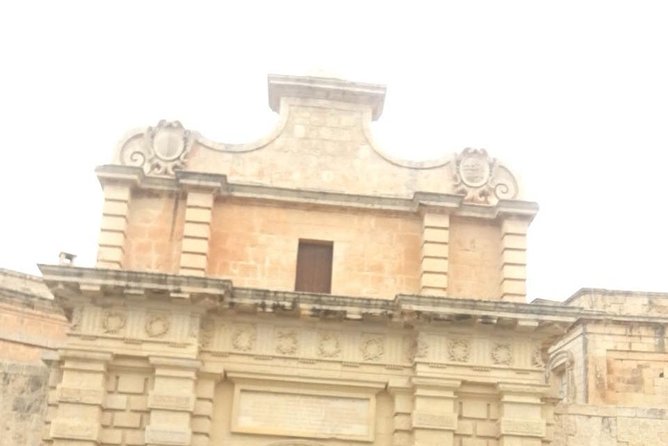
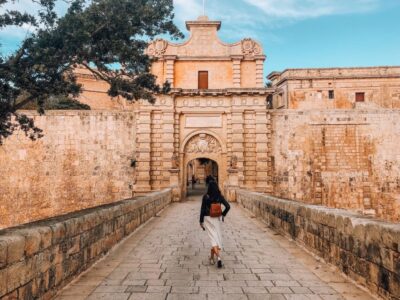
Mdina is one of those places where you feel the past before you even start reading signs. The stones, the quiet lanes, the way the city holds still while the rest of Malta buzzes in the distance—it all makes the first stretch of this tour click.
You start at Mdina Gate (VCM3+V9W). From there, you work through the historic district at a pace that leaves room for questions. The tour is about 2 hours 30 minutes, and it loops back to the meeting point at the end, so you’re not left figuring out where you are or how to get yourself out.
If you’re someone who likes “see it, then understand it,” this route is built for you. It’s not just a checklist of buildings. It’s a chain of sites tied to Malta’s long timeline—ancient roots, medieval life, then Rabat’s early Christian era—ending with the kind of food that locals brag about.
And yes, there’s a food payoff. The last stop at Is-Serkin Crystal Palace Bar is scheduled for pastizzi (and the snack is included), which helps keep the energy up for the walk back.
Cathedral of Saint Paul: the 9th-century BC point of view
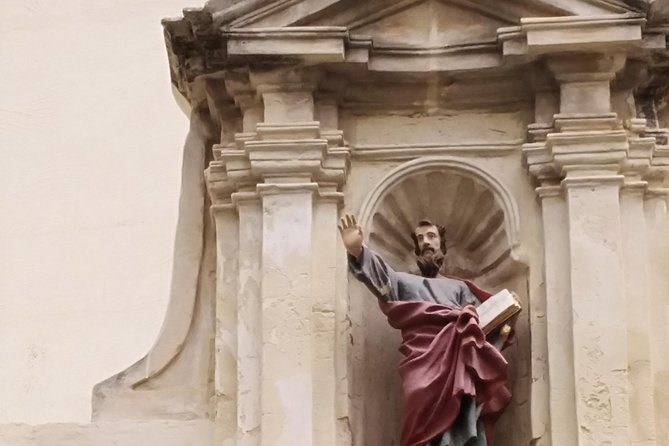
Your first major stop is the Cathedral of Saint Paul, described as the most important church in Malta and the seat of the Diocese. Even better, it’s not a site with a simple origin story. The same location has been occupied since the 9th century BC, which gives you a powerful perspective shift right away.
Why that matters on a walking tour: it trains your eye. Instead of treating Mdina as a postcard, you start noticing how layers build over time. A cathedral might look like one moment in history, but here you’re seeing an older continuity under the stones.
This stop also helps you understand why Mdina feels like it holds authority. It wasn’t only a defensive city; it was a spiritual and civic center in Malta’s story. If you’ve ever felt museums are too far removed, this kind of on-the-ground context helps you connect dates to places.
Practical note: churches can get busy, and you’ll want comfortable shoes and a light layer. Even if the weather is mild at the start, Mdina’s open areas can feel exposed.
Medieval courts in Mdina’s streets: the Universitas angle
Next comes a stop at the old law courts of the Universitas, which was the feudal government in medieval times. This is where the tour shifts from religious authority to how power worked on the ground.
The Universitas idea is useful because it explains Malta’s medieval structure without turning it into a textbook. You’re not just looking at walls; you’re imagining how decisions got made, how people lived under that system, and why Mdina’s layout suited a governing center.
For you, this kind of stop is often the difference between a “pretty buildings” walk and a “wait, that makes sense” experience. When you understand how government and daily life overlapped, the city feels more logical.
If you like history explained simply, you’re in good company. Reviews highlight guides like Julia for mixing big context with easy pacing, so you don’t get buried in dates.
More Maltese food, wine and pastizzi trails we have eaten our way along


A museum in one of Mdina’s oldest houses
After the law courts, the route includes a stop in one of the oldest houses in Mdina, now a museum of fine art collections. Even without knowing the details ahead of time, this is a smart transition.
It gives your eyes and brain a break from street-level explanation. You get to see how an old home can be reused as a museum space, and you get a sense of how private life and artistic display might have overlapped across centuries.
This is also a good “pause” moment in the tour. You can slow down, look closely, and let the earlier history settle. If you’re traveling with someone who likes art as much as architecture, this stop adds balance.
Downside to consider: fine arts museum time can feel shorter if you’re used to long museum visits. Here, it’s part of a bigger walking loop, so you’ll likely get an overview rather than an in-depth marathon.
Malta’s only Roman museum: small, focused, memorable
Then comes one of the big draws for history nerds and casual explorers alike: the only Roman museum in Malta. Even if Roman Malta isn’t your personal favorite period, a dedicated museum on that topic is hard to ignore. It also makes the later Rabat stops feel connected, not random.
This is where your tour gains momentum. You’re moving from Mdina’s medieval and ecclesiastical identity into Malta’s Roman layer. The tour keeps you oriented by building links: Mdina and Rabat aren’t separate stories. They’re different chapters of the same setting.
One practical tip: take a moment at this stop to jot down what stood out, even mentally. When you reach Rabat and hear about Roman Melita and the early Christian roots, those details make the explanations click.
And if you’ve been to big Roman sites before, you might find this museum more intimate. That’s not a flaw; it can be a plus if you want focused viewing instead of constant crowds.
Rabat begins: Roman Melita and the cradle of Christianity
Now you leave Mdina’s quiet intensity and move toward Rabat, the suburb of Medina. The schedule marks a 45-minute Rabat segment, and the admission ticket there is free.
The key idea you’ll hear is that both cities were the Roman city of Melita. That connection helps you understand why the landscape of Malta can feel like one long story rather than isolated sights.
Rabat also comes with a title that matters: it’s described as the cradle of Christianity in Malta. That phrase might sound grand, but on this tour it’s grounded. You’re heading toward Christian catacombs and burial sites that explain why Rabat became so significant.
For you, this is the emotional heart of the route. Mdina gives you power and faith from above—church and governance. Rabat brings faith to the ground level, tied to burial, community, and the long survival of belief.
If you’re traveling with kids, this section can still work well because the storyline is straightforward: Roman roots, then early Christian communities, then the physical evidence.
Christian catacombs in Rabat: burial history you can feel
After the Rabat intro, the tour includes a stop connected to the Christian catacombs of Rabat. The description is clear: catacombs in Malta where burial places, and the vast majority of those burial places, are found in Rabat.
This stop is powerful because it shifts the “what” to the “why.” You’re not only learning that catacombs exist—you’re learning that Rabat is where a major share of Malta’s burial history concentrates.
A small warning, in a practical way: catacomb-style sites can be cooler or feel enclosed depending on the exact area you’re led through. Even on a warm day, you might want a thin layer. And if you’re someone who prefers brighter open-air sights only, this is the part where you choose how long to linger.
The good news is that the tour keeps it moving, and guides in the reviews are praised for easy pacing and a friendly tone. That combination helps you process something heavy without feeling rushed.
Is-Serkin Crystal Palace Bar: why pastizzi is the perfect finish
This is the stop where the tour becomes a real memory. You end at Is-Serkin Crystal Palace Bar for pastizzi, with 20 minutes scheduled and the food admission included.
Pastizzi is described as the most delicious snack in Malta and the cheapest way to eat. More importantly, the tour frames it as a culture move, not just a snack grab. The tour says that the best pastizzi is sold at Is-Serkin, and it treats the pairing as part of the ritual.
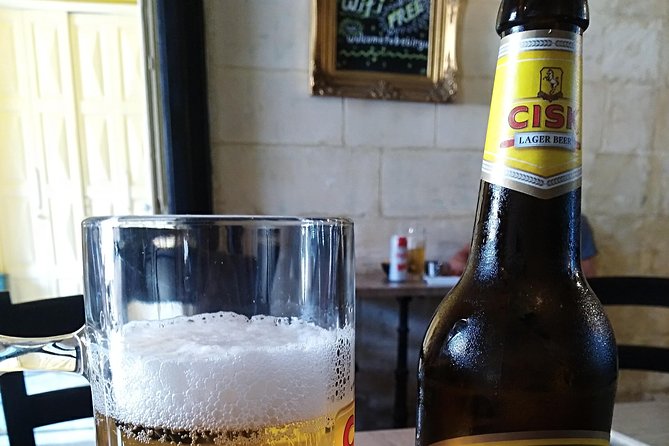
You’ll get the chance to enjoy pastizzi with a seasonable drink: hot tea or coffee in winter, or a cold beer in summer. That detail matters. It’s how locals actually experience comfort food—timed to the weather, not served the same way year-round.
Why this finish works for you:
- It gives your energy back after the walking and the catacombs.
- It turns a historical tour into a full sensory experience: taste plus story.
- It keeps your budget calmer because snacks are included.
If you have food allergies, the experience notes say you should advise when booking. So don’t guess—ask ahead. That’s the smart move, and it helps the team handle your needs responsibly.
Value and timing: $65 for a tight loop that actually adds up
At $65, you’re paying for a very focused 2.5-hour experience that combines multiple distinct areas: Mdina, Rabat, catacombs context, and the Is-Serkin pastizzi stop. The value comes from the mix: you’re not just paying for narration; you’re paying for organized movement through key locations that would take you longer to plan and piece together on your own.
Also, the structure is budget-friendly in a practical way. The tour includes snacks, and the schedule explicitly includes the Rabat admission as free and the pastizzi stop as included. That reduces the chance you’ll spend the afternoon hunting for separate tickets and meals.
Timing-wise, the start is 2:30 pm. That’s a good slot for many travelers because you can explore Mdina without rushing your morning. Just remember: reviews mention extreme heat on one day and wind and cold on another, so mid-afternoon doesn’t automatically mean comfortable.
My advice: check the forecast and dress like you’re walking outdoors in changing conditions. If you’re someone who runs cold, bring a layer. If you run hot, plan for heat management and water.
Finally, the group size maxes at 6 travelers. That’s not just a feel-good detail. It usually means questions get answered, and you don’t spend the tour stuck behind people who walk faster or slower than you do.
Guides make it: Julia’s energy and Silvia’s teaching style
A big reason this tour earns such strong ratings is guide quality. Reviews specifically mention Julia as polite, friendly, kind, understanding, and very well-informed, with a passion for the historical places. People also describe her as attentive and funny, which helps when the weather isn’t cooperating.
Another review mentions Silvia (in Spanish) as someone who not only knows the city history, but can also transmit her passion for it. The provider is listed as Silvia, so you may see a similar teaching style on the day you go.
What you should take from that: this isn’t a robotic read-from-a-brochure tour. You’re getting an explanation that feels like it’s coming from a real person who cares. That makes the quiet streets of Mdina feel less like scenery and more like a story you can follow.
Also, when reviews call out the challenge of weather (wind, cold, heat), what stands out is that the guide kept the experience enjoyable. That’s a sign the guide knows how to pace, adjust, and keep people engaged even when the day changes.
Who this tour is best for
This experience fits well if you want:
- A compact walking plan that covers Mdina plus Rabat in one afternoon
- A history route tied to real places, not just vague legends
- The payoff of Maltese comfort food at the end
It may be less ideal if you:
- Hate walking for 2.5 hours on uneven historic streets
- Prefer deep museum time instead of a tight itinerary
- Want a purely modern city focus (this is built for historic Malta)
If you’re traveling solo, you’ll still get a guided flow with a small group. If you’re traveling as a couple or friends, it’s also a good shared pace. Service animals are allowed, and the tour is near public transportation, so it’s not hard to reach even if you’re not renting a car.
Should you book: Mdina, Rabat and pastizzi
Book it if you want the best kind of Malta afternoon: history with a real ending. This tour is strong because it connects Mdina’s long occupation and medieval governance to Rabat’s Christian roots, then cashes out at Is-Serkin with pastizzi and a drink that matches the season.
Don’t book it if you’re expecting a slow, sit-down museum day. This is a walking tour that uses the time to hit several meaningful stops. If that suits your style, you’ll likely find it a good value at $65.
If the weather is questionable, keep an eye on conditions. The experience notes say it requires good weather, and wind or heat can change how comfortable the walk feels. Choose your shoes and layers, and you’ll be set for a smooth afternoon.
FAQ
Where does the tour start and end?
The tour starts at Mdina Gate (VCM3+V9W, Mdina, Malta) and ends back at the same meeting point.
What time does the tour begin?
The start time is 2:30 pm.
How long is the tour?
The duration is approximately 2 hours 30 minutes.
How much does it cost?
The price is listed as $65.
What is included with the tour?
Snacks are included. Pastizzi at Is-Serkin Crystal Palace Bar is included during the scheduled food stop.
Where is the pastizzi served?
Pastizzi is served at Is-Serkin Crystal Palace Bar.
Is there a Rabat stop, and is admission included there?
Yes. There is a Rabat segment (45 minutes) and the admission ticket for that stop is free.
How many people are in the group?
This tour/activity has a maximum of 6 travelers.
What if I have food allergies?
If you have any food allergies, you should advise when booking.
Is the tour outdoors, and does weather matter?
The experience notes say it requires good weather.
Who guides the tour?
The provider is listed as Silvia (Excursiones en Malta). Reviews specifically mention guides Julia and Silvia as being friendly and well-informed.
More Tour Reviews in Malta




More Maltese Food, Wine & Chocolate



More Mdina & Rabat Tours





Wondering what else is on? More Malta and Gozo trips from our own notebook


Mdina & Rabat Tours, compared.
 ★ 4.4Highlights of Malta & Mdina Full Day Tour with LunchFrom $792,688 reviews
 ★ 4.8Mdina and Rabat Walking Tour with CatacombsFrom $291,126 reviews
 ★ 4.3Mdina, Dingli Cliffs and San Anton Botanical GardensFrom $41991 reviews
 ★ 4.8Mdina and Rabat: Guided City Walking TourFrom $24549 reviews
 ★ 5.0Mdina and Rabat Insider’s TourFrom $24528 reviews
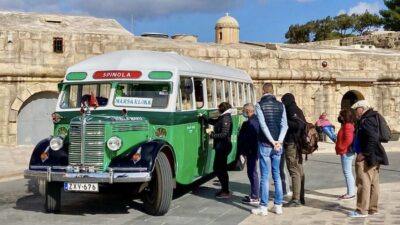 ★ 4.1Valletta: Vintage Bus to Valletta, Sliema, Rabat & MdinaFrom $9433 reviews
 ★ 5.0Mdina and Rabat Tour with Local GuideFrom $24408 reviews
 ★ 5.0Mdina and Rabat Walking Tour inc. Catacombs and St. Paul’s GrottoFrom $30341 reviews
Browse the lists this tour appears in