
Reviewed · VALLETTA WALKING TOURS
Discover Valletta Half-Day Walking Tour
Valletta gets explained in a half-day loop. This 3 hours 15 minutes group walking tour focuses on the city’s landmarks, viewpoints, and the big “why” behind the stone—starting near Floriana and ending at St Elmo with time to continue on your own. I especially like how the route mixes headline sights with quick context, so you’re not just collecting photos.
Two things I really like: you get a licensed guide who handles the logistics and pacing, and you also get built-in free time at the places that actually need it most, like Upper Barrakka Gardens and St John’s Co-Cathedral. The big tradeoff to keep in mind is that it’s a group tour, so you’ll move at the group’s speed, and the explanation depth can vary depending on the language setup on the day.
In This Review
- Key Highlights Worth Your Time
- Getting Started at The Phoenicia Malta (Floriana)
- The 3-Hour-15-Minute Route: City Gate to St Elmo
- Triton Fountain and the City Gate: Your Valletta Orientation
- Renzo Piano in the Streets: New Parliament and the Opera House Site
- Auberge de Castille: Baroque Power at the Highest Point
- Upper Barrakka Gardens: The View Break You’ll Appreciate
- Auberge d’Italie (MUŻA): Art Museum Vibes in a Knight’s Building
- Palazzo Parisio: Napoleon’s Short Visit Marker
- St John’s Co-Cathedral: 45 Minutes to Choose Your Own Depth
- St George Square and the Grandmaster’s Palace: Malta’s Political Heart
- Fort St Elmo and the National War Museum Option
- Malta Experience at 13:00: A Clean Ending If You Want More Context
- Price and Value: Why $22.11 Can Make Sense
- Group Tour Reality Check: Pace, Language, and How to Get the Most
- Who This Walk Fits Best (And Who Might Prefer Something Else)
- Should You Book This Valletta Half-Day Walking Tour?
- FAQ
- How long is the Valletta half-day walking tour?
- Where does the tour start and end?
- What time does the tour begin?
- What’s included in the price?
- Do I need to pay for site entrances during the tour?
- Is there free time during the walk?
- How long is the Malta Experience show, and when does it happen?
- Is the tour a small group?
- Does the tour use mobile tickets?
- Can I cancel for a full refund?
Key Highlights Worth Your Time
- Easy-to-find meeting point at The Phoenicia Malta (Floriana) and a clear end at the Malta Experience in Valletta
- Cost control thanks to a small-to-medium group format (max 50)
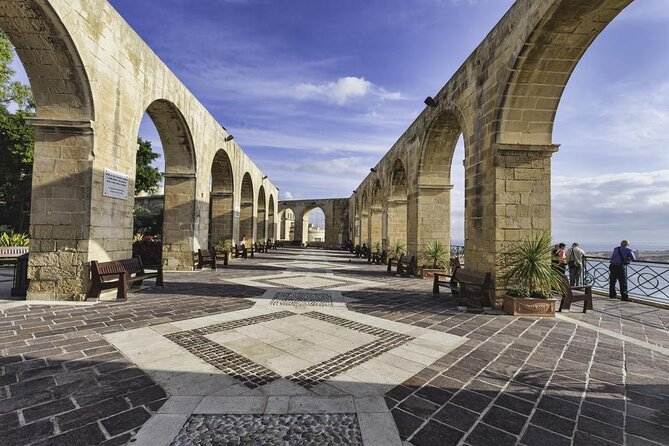
- Great views built in, especially from Upper Barrakka Gardens over Grand Harbour and the Three Cities
- History stops without a museum day: city gate, auberges, palace square, and Fort St Elmo
- A smart finish option with the 13:00 Malta Experience show (45 minutes) if you want more context
More Valletta walking tours we have followed through the old streets
- Valletta: Guided Walking Tour with Optional Cathedral Tour
★ 4.3 · 758 reviews - The Valletta Street Food and Culture Walking Tour
★ 5.0 · 711 reviews - Valletta: Vintage Bus to Valletta, Sliema, Rabat & Mdina
★ 4.1 · 433 reviews - Valletta Segway Tour and The Malta Experience
★ 5.0 · 397 reviews
Getting Started at The Phoenicia Malta (Floriana)
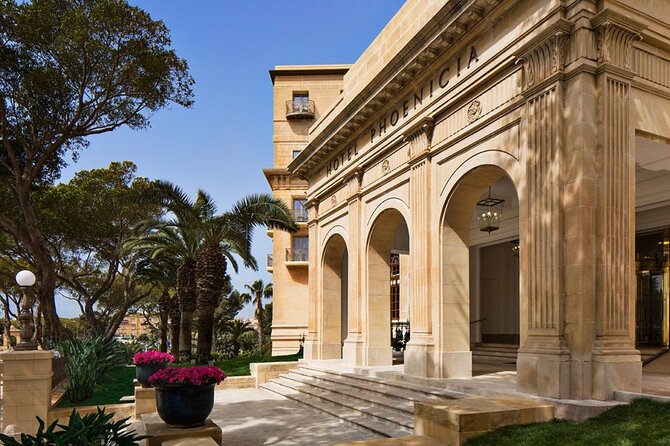
The tour starts at 9:15 am at The Phoenicia Malta, The Mall, Floriana. This matters because it sets you up early in the day, before Valletta gets too hot and too crowded, and it gives you a real chunk of the afternoon back after the walk finishes.
You’re not relying on hotel pickup. Instead, you’re walking into Valletta from a fixed meeting spot, near public transportation. That’s simple—and it also means you can plan your morning without guessing how a van will thread through streets.
The tour uses a mobile ticket, so I’d make sure your phone battery is topped up and your confirmation is easy to find. Group tours go faster when everyone’s ready on the sidewalk.
The 3-Hour-15-Minute Route: City Gate to St Elmo
The whole walk is about 3 hours 15 minutes, ending around 12:45 at the Malta Experience entrance near the St Elmo Bastions. You’ll cover a lot of ground because Valletta is compact, but the pace is still walkable for most people.
Because this is a group (up to 50 travelers), expect short stops, quick orientation points, and frequent “move along” moments. That can be great for value, but if you want long lingering at every corner, you’ll need to treat the free-time windows as your main chance.
Also note what’s not included: entrance tickets. The guide will show you the architecture and explain what’s where, but if you want museum-level detail, you’ll pay those entry fees separately.
Triton Fountain and the City Gate: Your Valletta Orientation
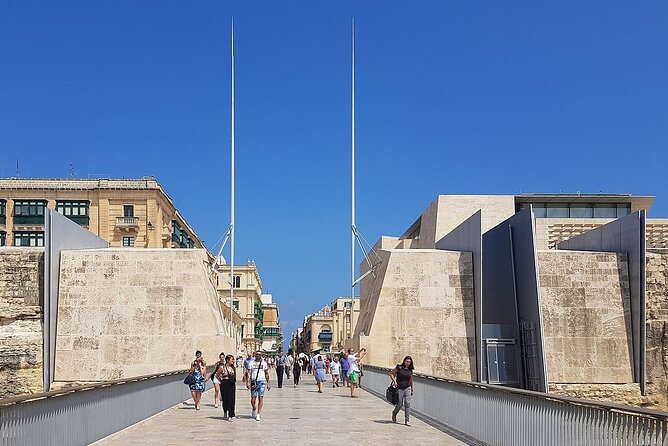
The tour begins with a landmark that gives you an immediate sense of scale: the Triton Fountain just outside Valletta’s City Gate. It’s a modernist piece that was inaugurated in 1959 and restored in 2018—a reminder that Valletta isn’t only medieval and Baroque. It’s a working city that kept evolving.
From there, you move into the main entry point: Valletta City Gate. The current gate is the fifth version on the site, and it was completed in 2014 to designs by Italian architect Renzo Piano. If you’re trying to understand Valletta quickly, this is a good place to start: the gate is physically tied to the fortifications and also leads directly to Republic Street, the city’s main spine.
What I like here: you get context about the fortification system (curtain wall sections and bastions) right as you’re standing at the threshold of the city. It makes the rest of your walk feel less random.
Possible drawback: if you expect a lot of time inside fortifications themselves, this stop is more about the overview than extended exploration.
More Maltese Islands walks through the honey-stone streets


Renzo Piano in the Streets: New Parliament and the Opera House Site
Next up are two buildings tied to the same modern architect: the New Parliament and the Royal Opera House site.
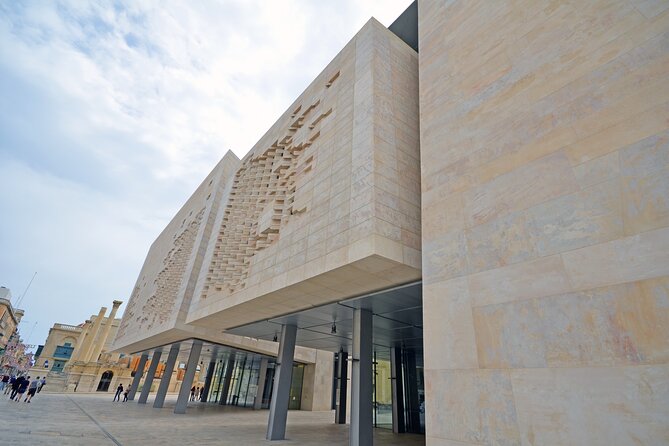
The New Parliament building was constructed between 2011 and 2015, also by Renzo Piano, as part of the City Gate Project. The building’s structure is a steel frame clad in Gozitan limestone, and the design references honeycomb shapes—because Malta’s name is linked to Melite, which is associated with honey. Even if architecture isn’t your thing, this is the kind of detail that makes your photos more meaningful.
Then you reach the Royal Opera House site. The original opera house dates to 1866 and was hit during WWII in 1942, then destroyed. Later, the ruins were redesigned by Renzo Piano, and by 2013 the site returned as a functioning performance venue.
Why it’s valuable: these two stops show Valletta as layered, not stuck in one era. You can walk the streets and still see how the city rebuilt itself after major disruption.
Auberge de Castille: Baroque Power at the Highest Point
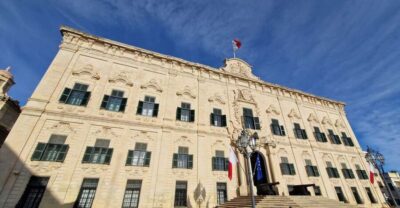
At Auberge de Castille (Castile Palace), you’re near the top of Valletta. Built in the Baroque style in the 1740s, it replaced an older structure from 1574 that had housed knights from the Order of Saint John’s langues of Castile, León, and Portugal.
Today it houses the Office of the Prime Minister of Malta. So this isn’t a “dead monument.” It’s part of modern governance, which you can feel in the way it’s treated and maintained.
If you like architecture, this is one of the best quick “stop and see” points on the route. The guide’s job here is to help you recognize why such buildings were so central to control, identity, and status in the Order’s world.
Upper Barrakka Gardens: The View Break You’ll Appreciate
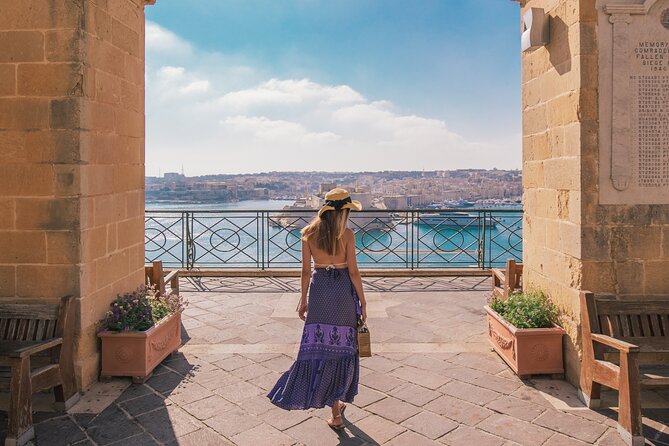
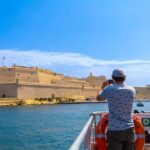
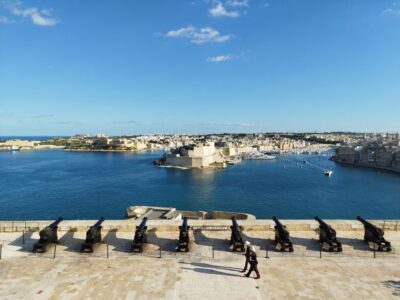
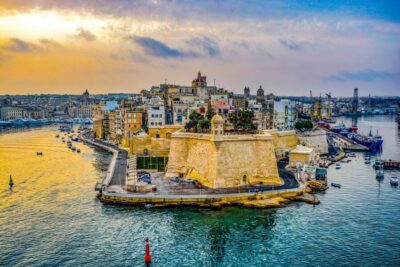
You’ll get a 15-minute window at Upper Barrakka Gardens. This is one of those stops that makes the whole tour feel worth it, because it turns your walking effort into a wide-open reward: Grand Harbour, the Three Cities, and the shipyard area beyond.
The gardens sit on the upper tier of St. Peter and Paul Bastion, built in the 1560s. Historically, the knights used this kind of terrace space for recreation, and the views still do the job now—just with your phone, not a sword.
Practical tip: this is a short time slot, so don’t spend it scrolling. Stand still for a minute and look across the water; Valletta’s geography starts to click.
Auberge d’Italie (MUŻA): Art Museum Vibes in a Knight’s Building
Next is Auberge d’Italie, built in the late 16th century for knights from the Italian langue of the Order of Saint John. In 2018, it became the new National Art Museum (MUŻA).
The walking tour stop is brief, but it’s useful if you’re deciding whether to spend extra time later. If you’re an art fan, this is your hint that MUŻA is worth a separate visit. If you’re not, it still helps you place the building in the bigger story of the auberges.
Palazzo Parisio: Napoleon’s Short Visit Marker
At Palazzo Parisio, you’re looking at a palace with a quick, specific moment in history. It was built in the 1740s by Domenico Sceberras, then passed through the Muscati and Parisio Muscati families.
Napoleon stayed here for six days in June 1798, early in the French occupation of Malta. Later, the building became the Government of Malta’s General Post Office (from 1886 to 1973), then the Ministry for Agriculture, and now it houses the Ministry for Foreign Affairs.
This stop works well because it shows how the same shell of power gets repurposed over centuries. It’s not just “look at old stuff.” It’s “watch what old stuff becomes.”
St John’s Co-Cathedral: 45 Minutes to Choose Your Own Depth
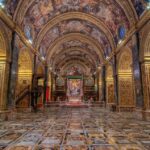
Your biggest “do it your way” block is at St John’s Co-Cathedral (with the museum). You’ll have 45 minutes of free time here, and entrance isn’t included.
That time gives you three realistic options:
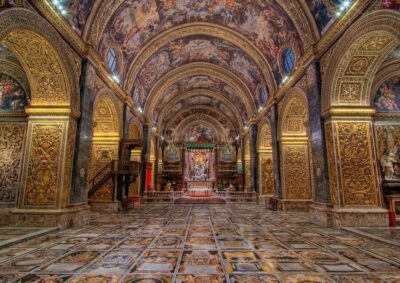
- You can buy tickets to see the Co-Cathedral and Museum, including the Caravaggio masterpieces in the Oratory, the Flemish tapestries, and the church museum.
- You can also focus on the marble inlaid floor (the tour emphasizes its beauty), even if you don’t go deep into every gallery.
- Or, you can step back to shop or grab a coffee on Republic Street and Republic Square, then return to rejoin the group.
This is where the group format can help or hurt you. It helps because you’re not rushed through; it hurts if you try to do too much in 45 minutes. If Caravaggio is your must-see, prioritize that over wandering.
St George Square and the Grandmaster’s Palace: Malta’s Political Heart
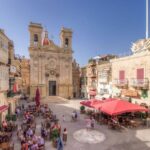
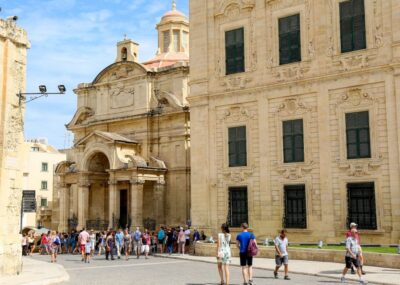
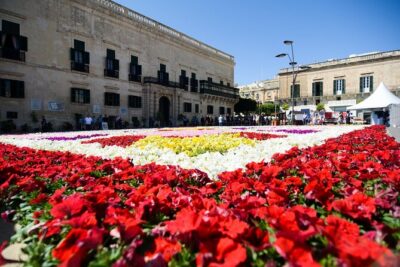
You’ll then reach St George Square, also known as Palace Square, right in the heart of Valletta in front of the Grandmasters’ Palace. This square has held important events since the 17th century, and it’s still a focal point in the city’s layout.
From there comes the showpiece: the Grandmaster’s Palace (officially The Palace). Built between the 16th and 18th centuries as the seat of the Grand Master of the Order of Saint John, it later housed the Parliament of Malta from 1921 to 2015. Today, it houses the Office of the President of Malta, plus museum spaces like the Palace State Rooms and Palace Armoury, which are open to the public.
This is another stop where your choice matters. You can treat it as a detailed exterior and photo break, or you can add museum time later if your interests run political, military, or just straight-up architecture.
Fort St Elmo and the National War Museum Option
Next is National War Museum – Fort St Elmo. This star fort sits on the seaward shore of the Sciberras Peninsula, controlling access to both harbours (Grand Harbour and Marsamxett Harbour). It’s best known for the Great Siege of Malta in 1565.
Since 1975, part of the fort has housed the National War Museum. That means even though the walking tour stop is short, it sets you up for a deeper follow-up if you’re into military history or the story of how Valletta survived.
If your feet are tired, this can still be a satisfying stop because the fort’s shape and position make the defense logic easy to grasp—even without museum entry.
Malta Experience at 13:00: A Clean Ending If You Want More Context
The tour ends at 12:45 at the entrance of the Malta Experience. There’s a 45-minute multilingual audio-visual show at 13:00, and this is the kind of add-on that can turn “I saw buildings” into “I understand what they were for.”
You can also enjoy a drink and something to eat overlooking Grand Harbour, though those items aren’t included. This is a good place to pause before you head off on your own.
If you’re the type who likes structure after a walking tour, this finish is useful. If you’d rather keep exploring independently, you can skip it and simply use the harbour view to steer your next plan.
Price and Value: Why $22.11 Can Make Sense
At $22.11 per person, this half-day group tour is priced for value, not for maximum museum time. What you’re buying is a professional licensed guide plus a route that strings together major sights efficiently, with only a few brief stops where you decide whether to pay for entries.
Here’s the key: because entrance fees are not included, you control your total cost. If you only want exterior sightseeing and the built-in views, you can keep spending low. If you decide to go inside St John’s Co-Cathedral and add a museum later, your total will rise—but at least you’re choosing those upgrades with intention.
Also, the timing helps. When the tour ends at 12:45, you still have the afternoon free to explore at your own pace. For a tight schedule, that’s a big part of the “value” equation.
Group Tour Reality Check: Pace, Language, and How to Get the Most
This kind of tour is best when you treat it like a guided sampler. You’ll see a lot, but you won’t have long, relaxed deep dives at every site.
Two practical considerations:
- Language can affect how detailed the explanations feel. I’d watch for the language setup on the day, especially if you care about history detail.
- Group timing matters. On at least one occasion, I’d allow extra patience at the start because it can take time for everyone to arrive before you roll out.
If you’re traveling with limited time and you want a guided overview that still leaves room for personal choices, it’s a strong fit.
Who This Walk Fits Best (And Who Might Prefer Something Else)
This tour works especially well if you:
- want a quick Valletta orientation without planning a full day of routes
- like architecture and fortifications, but don’t want to commit to every museum entry
- want views built into the schedule, not just street-level sightseeing
- appreciate a guide handling the “where to go next” part
It might feel less ideal if you:
- hate group pacing or want long sits at each attraction
- plan to see every major interior and would rather do a full guided museum day
- need very detailed explanations in a specific language and can’t tolerate variation
Should You Book This Valletta Half-Day Walking Tour?
I’d book this if you want a smart, efficient Valletta introduction with a guide and real choices for what you pay to enter. The route is packed with recognizable stops: City Gate, auberges like Auberge de Castille and Auberge d’Italie, the marble-floor area of St John’s Co-Cathedral, Grandmaster’s Palace, and Fort St Elmo, plus a great view break at Upper Barrakka Gardens.
If you’re the kind of traveler who likes getting your bearings fast and then spending your afternoon deeper, this one fits. Just go in knowing it’s a walking sampler, and plan your “must enter” items in advance—especially St John’s Co-Cathedral.
FAQ
How long is the Valletta half-day walking tour?
It runs for about 3 hours 15 minutes, and it ends around 12:45 pm.
Where does the tour start and end?
It starts at The Phoenicia Malta, The Mall, Floriana and ends at the Malta Experience entrance at St Elmo Bastions, Triq Il-Mediterran, Valletta.
What time does the tour begin?
The start time is 9:15 am.
What’s included in the price?
A professional licensed guide and the half-day walking tour are included.
Do I need to pay for site entrances during the tour?
Many entrances are not included, including stops like New Parliament, Royal Opera House site, auberges, and especially St John’s Co-Cathedral and Museum, which is listed as entrance not included.
Is there free time during the walk?
Yes. You get 15 minutes at Upper Barrakka Gardens for the view, and 45 minutes at St John’s Co-Cathedral and Museum area (entrance not included). The Malta Experience show is optional after the tour ends.
How long is the Malta Experience show, and when does it happen?
The Malta Experience show is 45 minutes and starts at 13:00.
Is the tour a small group?
It has a maximum of 50 travelers.
Does the tour use mobile tickets?
Yes. The tour uses a mobile ticket.
Can I cancel for a full refund?
Yes. Free cancellation is available if you cancel at least 24 hours before the experience start time.
More Tours in Malta





More Tour Reviews in Malta


More Valletta Walking Tours




Wondering what else is on? More Malta and Gozo trips from our own notebook




Valletta Walking Tours, compared.
 ★ 5.0The Original Valletta Walking TourFrom $262,719 reviews
 ★ 4.7Valletta: 3-Hour Walking TourFrom $251,605 reviews
 ★ 4.8Valletta: Guided City Walking TourFrom $241,256 reviews
 ★ 4.8Valletta: Street Food and Culture Walking TourFrom $651,251 reviews
 ★ 4.9Valletta: City Walking Tour in a Small GroupFrom $24957 reviews
 ★ 4.3From Sliema: Valletta and the Three Cities Scenic CruiseFrom $24763 reviews
 ★ 4.3Valletta: Guided Walking Tour with Optional Cathedral TourFrom $46758 reviews
 ★ 5.0The Valletta Street Food and Culture Walking TourFrom $66711 reviews
Browse the lists this tour appears in