
Reviewed · SLIEMA, ST JULIAN'S & THE COASTAL TOWNS
Cruise around Malta’s Harbours and Creeks from Sliema
Somebody built Malta for boat watching.
This 90-minute cruise from Sliema Ferries turns busy harbours into a moving map, with English audio commentary that helps you spot what you’re looking at. I love the outside-view angle you get right away from the water, and I also like that the route hits both the calmer creeks and the showpiece Grand Harbour. The main catch is weather: if it’s windy or choppy, the ride can feel rough, and the tour is not recommended for people prone to sea sickness.
You also get a smart “do it now, walk later” setup. The boat departs from a jetty in the center of Sliema, so before or after you can jump off, stroll the promenade, and grab a coffee or a bite nearby. My only practical note is that finding the right boat at the pier can be a little confusing if you arrive late or don’t read the pickup instructions carefully.
In This Review
- Key things to know before you cruise Malta’s harbours
- Sliema Ferries to the harbours: why this route feels smart
- How the English audio makes the whole cruise click
- Sliema Creek: the busy waterway warm-up
- Manoel Island and the Lazzaretto: quarantine-era Malta in one pass
- Ta’ Xbiex Creek, Msida Creek, and Pietà Creek: the shoreline details you miss on land
- Valletta and Floriana fortifications: seeing the capital from the water
- Valletta Grand Harbour: the main stage for Malta’s maritime identity
- Marsamxett Harbour and the shipyard zone: leisure meets industry
- The Three Cities from the water: Cospicua, Senglea, Vittoriosa
- Kalkara Creek and Rinella Creek: the quieter creeks with small texture
- Price and timing: why $24.19 can work for your Malta plan
- Who should book this harbour cruise?
- Quick check: should you book this Malta harbours cruise?
- FAQ
- How long is the cruise around Malta’s harbours and creeks from Sliema?
- What language is the commentary provided in?
- What’s included in the ticket price?
- Do I need a guide on board?
- Where does the tour start and end?
- Is the cruise suitable if I get sea sick easily?
- How many people are on the tour at most?
Key things to know before you cruise Malta’s harbours
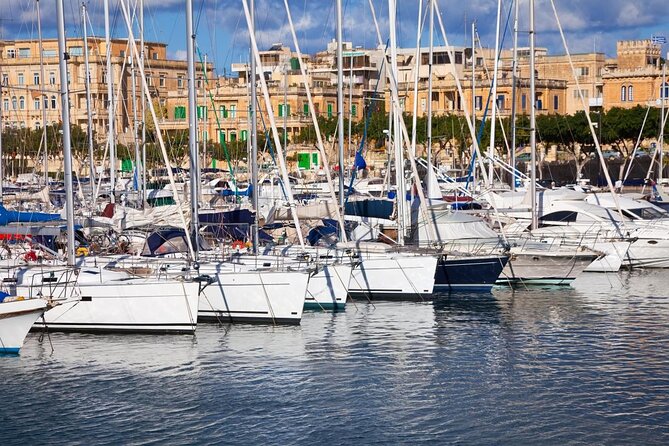
- Center-of-Sliema departure: easy to pair with a promenade walk before or after
- English narration over the PA: steady explanations as you pass major sights
- Manoel Island and the Lazzaretto: you’ll see how quarantine-era Malta worked
- Grand Harbour from the water: fortifications and scale look totally different than from land
- Three Cities pass-by: Cospicua, Senglea, and Vittoriosa are best appreciated with moving views
- Weather matters: wind can make the water bumpy, so dress for it
More Sliema and St Julian's outings we have strolled the seafront on
- Sliema Cruise to Gozo, Comino and Blue Lagoon in Beautiful Malta
★ 4.0 · 705 reviews - Valletta: Vintage Bus to Valletta, Sliema, Rabat & Mdina
★ 4.1 · 433 reviews - Malta: Pub Crawl of Paceville and St Julian’s with Drinks
★ 3.9 · 392 reviews - From Sliema: Malta Cruise to Blue Lagoon, Crystal Lagoon & Caves
★ 4.5 · 262 reviews
Sliema Ferries to the harbours: why this route feels smart
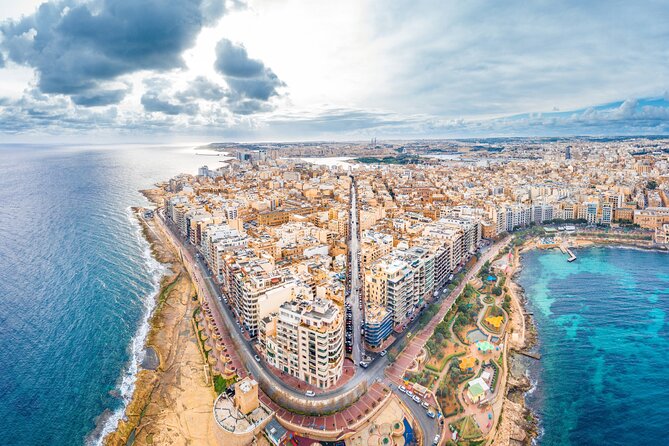
Starting in Sliema is a gift. You’re already in the middle of the action, with shops and restaurants within a short walk of the dock, plus that classic waterfront promenade for after your cruise. If your Malta time is short, this is a quick way to get the “big picture” without committing to a full-day plan.
This tour runs about 1 hour 15 minutes to 1 hour 30 minutes, and it’s priced at $24.19 per person. In practical terms, that’s the sweet spot where you can buy the experience even if you’re on a lean budget—and still have enough energy left to explore by foot after.
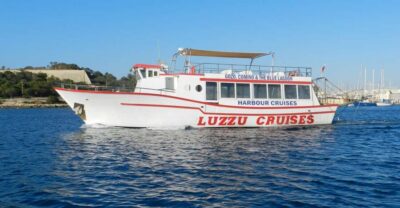
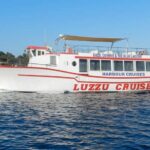
The boat experience is casual and straightforward. You’ll cruise past landmarks as the audio plays through a PA system, and you’ll have time to move around for better views. If you grab seats outside (when available), you’ll feel the sea breeze and get the best sightlines.
How the English audio makes the whole cruise click
One reason this cruise earns such strong scores is that the commentary does its job. You’re not just floating around—you’re getting a running explanation of what’s ahead and why it matters. The narration stays in English, and the crew/captain may add extra spoken context as you go.
That matters more than you might think. Malta’s shoreline can look similar from a distance—creeks, breakwaters, fort walls—until someone labels them. With the audio guiding you, you’ll notice patterns fast: where harbours open up, where the fortifications start to dominate, and how the city edges change from one area to the next.
Also, there’s a nice rhythm to the experience. There are stretches where you can just watch and reset your eyes without constant chatter. That balance makes it easier to enjoy the ride rather than treating it like a lecture.
Sliema Creek: the busy waterway warm-up
You begin by cruising through Sliema Creek, which is constantly active with other harbour cruise boats. That’s not a drawback—it’s part of what makes the start lively. You’re seeing Malta at work, not only Malta as postcard scenery.
The jetty is placed so you’re right in central Sliema, which is useful for your timing. If you want to do a loop, you can pair the cruise with a stroll along the promenade right before departure, or unwind with a meal after you return. Either way, you avoid long transfers and you keep the day light.
If you’re sensitive to wind, know that the open water near Sliema can feel breezy. Bring a layer, even in warmer months. On cooler days, a warm top makes a big difference once you’re out on the deck.
More Grand Harbour cruises we have circled the bastions on
Manoel Island and the Lazzaretto: quarantine-era Malta in one pass
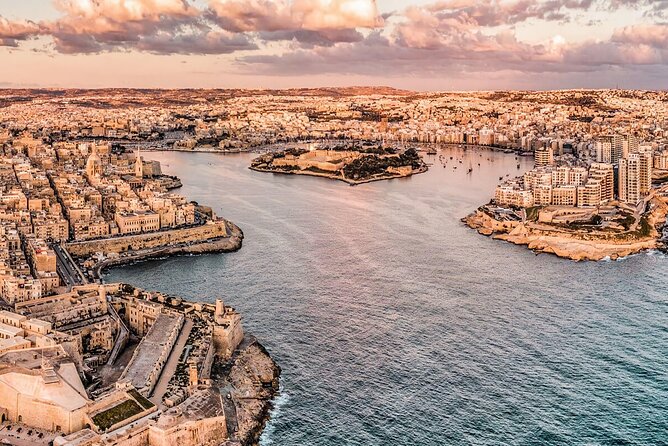
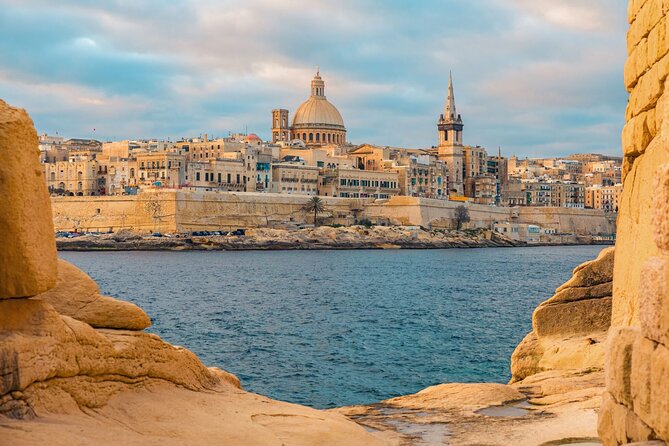
Next up is Manoel Island, a low, leaf-shaped island in Marsamxett Harbour. It’s connected to the mainland by a bridge, and it carries a strong story for such a small piece of land—named for António Manoel de Vilhena, who built a fort there in the 1720s.
From the boat, Manoel Island feels like a calm pocket between bigger harbour movements. As you pass, you’ll also see the Manoel Island Yacht Marina, which gives you a contrast: maritime leisure right alongside older, more serious infrastructure.
Then comes Lazzaretto, the former quarantine facility and hospital on Manoel Island. The complex includes buildings from the 17th and 19th centuries, and many structures still exist, though they’re in poor condition after World War II damage and decades of abandonment. The plan is to restore it, so even from the water you’re seeing something that’s part history site, part future project.
If you like human-scale stories—how cities protected people before modern medicine—this stop is a highlight. It’s also a reminder that Malta’s harbours weren’t only for trade and travel; they were for safety and control too.
Ta’ Xbiex Creek, Msida Creek, and Pietà Creek: the shoreline details you miss on land
After Manoel, the route continues through a sequence of creeks and harbour edges: Ta’ Xbiex Creek, Msida Creek, and Pietà Creek.
Msida Creek is especially easy to spot because of a breakwater on the starboard side as you enter. That’s the kind of practical detail the audio helps with—so you’re not just watching water, you’re learning how to read the coastline.
These creeks tend to feel more intimate than Grand Harbour. You get the sense of neighbourhood-by-the-water Malta, where daily life and boats share the same space. If you’ve been walking on land and want to understand how the city “turns” toward the sea, this part of the cruise does that job.
One small consideration: because these segments are close to shore, you may feel more movement if wind catches the water. Keep your eyes on your footing and dress for the ride, not the forecast you see on land.
Valletta and Floriana fortifications: seeing the capital from the water
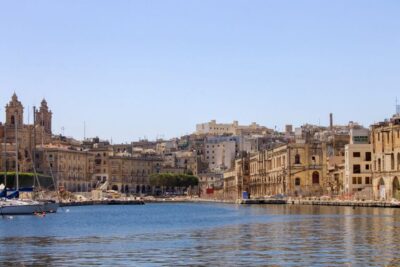
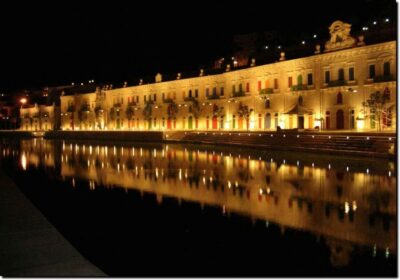
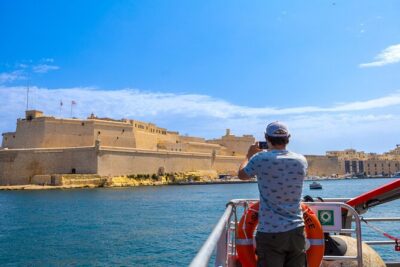
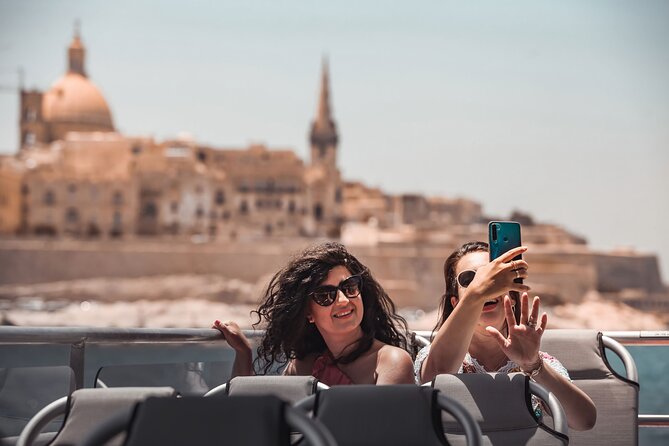
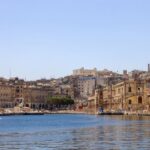
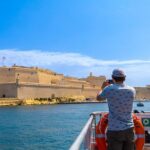
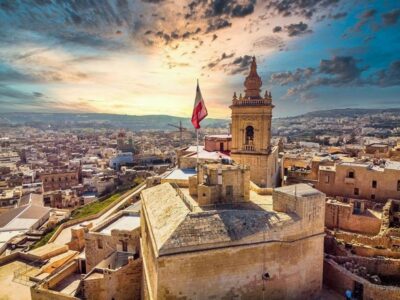
Now the cruise shifts toward Malta’s most dramatic viewpoints: Valletta and Floriana from the sea. You’ll pass the battlements and imposing fortifications around Valletta, then glide by similar defensive structures around Floriana.
From the water, fortifications read like a full system rather than isolated walls. You can see how the coastline shape, angles, and elevation work together. It’s one of those “oh, that’s why this place looks like that” moments.
This is also where the scale hits. Malta’s capital isn’t just a city—it’s a fortress city. When you approach it from the harbour, the design stops being abstract and becomes physical.
If you’re a photo person, aim to be ready as the boat nears viewpoints along the walls. The best shots often happen when the boat is moving steadily and you have a clear line of sight from your side of the deck.
Valletta Grand Harbour: the main stage for Malta’s maritime identity
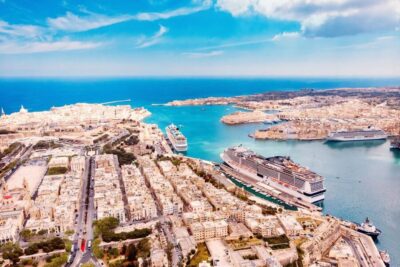
Passing by Valletta Grand Harbour is the big show. This is a wide stretch of water that has functioned as a major maritime gateway for thousands of years. You’re looking across the harbour between Valletta and the historic waterfront towns of Vittoriosa, Senglea, and Cospicua.
The Grand Harbour also acts like a stage for large-scale shipping and visiting vessels, so the scene feels more international than the quieter creeks. The fortifications around the water create that “this place matters” feeling right away.
Even if you’ve already toured Valletta streets, viewing the harbour makes the story make more sense. The city’s identity is tied to the water—who arrives, who leaves, and what the coastline needs to defend.
Marsamxett Harbour and the shipyard zone: leisure meets industry
After the Grand Harbour sweep, the route continues around Marsamxett Harbour, which is generally more dedicated to leisure use than the Grand Harbour. That shift gives you contrast: one side of the coast feels more relaxed, more boat-focused for pleasure, while another side feels built around scale and access.
Then you’ll pass Menqa and Marsa Creeks, including the inner basin of the Malta Ship Building Yard, and continue through the French and Dockyard Creeks. This is the part of the cruise that surprises people who only think of Malta as historic streets and churches.
Even if you don’t read every building detail, you’ll feel the function. The dockyard areas explain how the island maintains maritime capability beyond the tourist lens. It’s practical Malta, running in the background.
The Three Cities from the water: Cospicua, Senglea, Vittoriosa
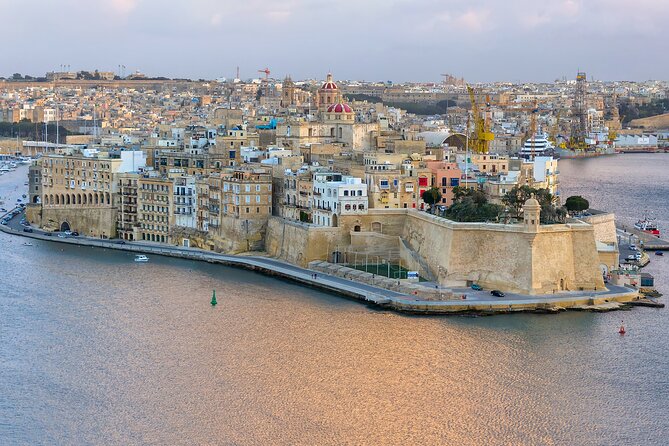
One of the most rewarding segments is the pass-by of Cospicua, Senglea, and Vittoriosa—the so-called Three Cities. These fortified towns have provided homes and fortresses for settlers for a very long time, with their harbour inlets used since Phoenician times. Knights of St. John also shaped the area, and many of the palaces, churches, forts, and bastions are older than Valletta’s.
From the cruise, you see why they work as a group. The waterfront geometry and fort layouts create a continuous sense of defense and density. These towns don’t look like standalone postcards from the sea; they look like a connected system built to protect access to the harbour.
Passing each city in sequence keeps it interesting:
- Cospicua: another fortified waterfront with strong harbour presence
- Senglea: the view helps you understand its defensive structure
- Vittoriosa: you get a sense of the earliest “gateway” role the area played
This section is also a nice reality check. Valletta can feel like the main character on land. From the water, the Three Cities get their own spotlight.
Kalkara Creek and Rinella Creek: the quieter creeks with small texture
Before returning to Sliema, the route passes Kalkara Creek and Rinella Creek.
Kalkara is described as the second creek to the port side when entering Grand Harbour, with a picturesque village overlooking the bay. Rinella is the first creek to the port side, and there’s a small sandy beach at the extreme end. These details help you frame what you’re seeing: not every part of the coastline is fortress-and-walls. Some sections are for everyday waterfront life.
This part of the cruise often works well if you’re starting to feel a little “harbour fatigue.” You’ve seen the big landmarks already, and now you’re in a calmer visual mode—more shoreline texture, smaller features, and a little more breathing room.
Price and timing: why $24.19 can work for your Malta plan
At $24.19 per person, this cruise is priced for value, not for exclusivity. You’re paying for a short, high-impact orientation ride around Malta’s harbour system—especially if you’re not spending a full day on the water.
The duration is also practical. At roughly 1 hour 15 minutes to 1 hour 30 minutes, you’re not losing half a day to transportation and waiting. You can fit it into a “light schedule” day or into the same day you arrive, as long as you give yourself enough time to find the boat.
The other value factor is scale. For the money, you get a wide sweep: Sliema Creek, Manoel Island and Lazzaretto, the Valletta/Floriana fortifications, Grand Harbour, Marsamxett, the shipyard creeks, the Three Cities, and finally Kalkara and Rinella.
And yes, there’s no mention of included food or drinks. If you want a snack or a drink, plan to pick it up before or after. One common wish is for a bar on board, but you’re mainly buying the views and the narration.
Who should book this harbour cruise?
This tour fits best if you:
- want big harbour viewpoints without lots of walking
- like learning what you’re seeing through English audio
- are staying in the Sliema area and want an easy add-on
- enjoy boats but don’t want a long day on the water
If you’re prone to sea sickness, I’d think hard. The tour specifically notes it’s not recommended for people who get sea sick, and reviews mention wind and choppy water can make it feel more intense.
It also helps if you dress like you might be outside on a windy deck. Bring a layer and consider a small blanket for cooler months. Getting cold on the water turns a relaxing cruise into a “just get me back” situation fast.
Quick check: should you book this Malta harbours cruise?
Book it if you want an efficient Malta overview, with English narration and water-level views of Valletta, the Three Cities, and Manoel Island. The price is reasonable, the timing is short, and the route covers a lot of “why Malta looks like Malta” territory.
Skip it (or consider another option) if you know you’ll struggle with wind, choppy water, or you need food and drinks included on board. Also, arrive with extra patience to find the correct boat at Ferries 4Malta—the pier can have many boats at once, and it’s worth double-checking details before you step on.
FAQ
How long is the cruise around Malta’s harbours and creeks from Sliema?
It runs about 1 hour 15 minutes to 1 hour 30 minutes.
What language is the commentary provided in?
The audio commentary is offered in English.
What’s included in the ticket price?
You get the sightseeing cruise and audio commentary over a PA system.
Do I need a guide on board?
A guide is not listed as included. The tour uses audio commentary through the PA system.
Where does the tour start and end?
It starts at Ferries 4Malta in Sliema and ends back at the same meeting point.
Is the cruise suitable if I get sea sick easily?
It is not recommended for travelers who are prone to sea sickness.
How many people are on the tour at most?
The cruise has a maximum of 80 travelers.
More Tour Reviews in Malta
More Grand Harbour Cruises
More Along the Sliema & St Julian's Coast


Wondering what else is on? More Malta and Gozo trips from our own notebook

Sliema, St Julian's & the Coastal Towns, compared.
 ★ 4.5From Sliema: Comino, Crystal Lagoon, and Blue Lagoon CruiseFrom $403,792 reviews
 ★ 4.5From Sliema: Gozo, Comino and Blue Lagoon CruiseFrom $413,461 reviews
 ★ 4.4St Paul’s Bay: Malta National Aquarium Entry TicketFrom $202,532 reviews
 ★ 4.5From Sliema: Cruise Around Malta’s Harbours & CreeksFrom $242,292 reviews
 ★ 4.8Sliema: Boat Trip to Comino Blue Lagoon, Gozo, and CavesFrom $472,061 reviews
 ★ 4.4From Sliema: Gozo, Comino & The Blue Lagoon Boat & Bus TourFrom $511,931 reviews
 ★ 4.5St Paul’s Bay: Comino, Blue Lagoon, Gozo, & Caves Boat TourFrom $34979 reviews
 ★ 4.7Paceville Pub Crawl with Drinks and GamesFrom $14910 reviews
Browse the lists this tour appears in